
Introduction
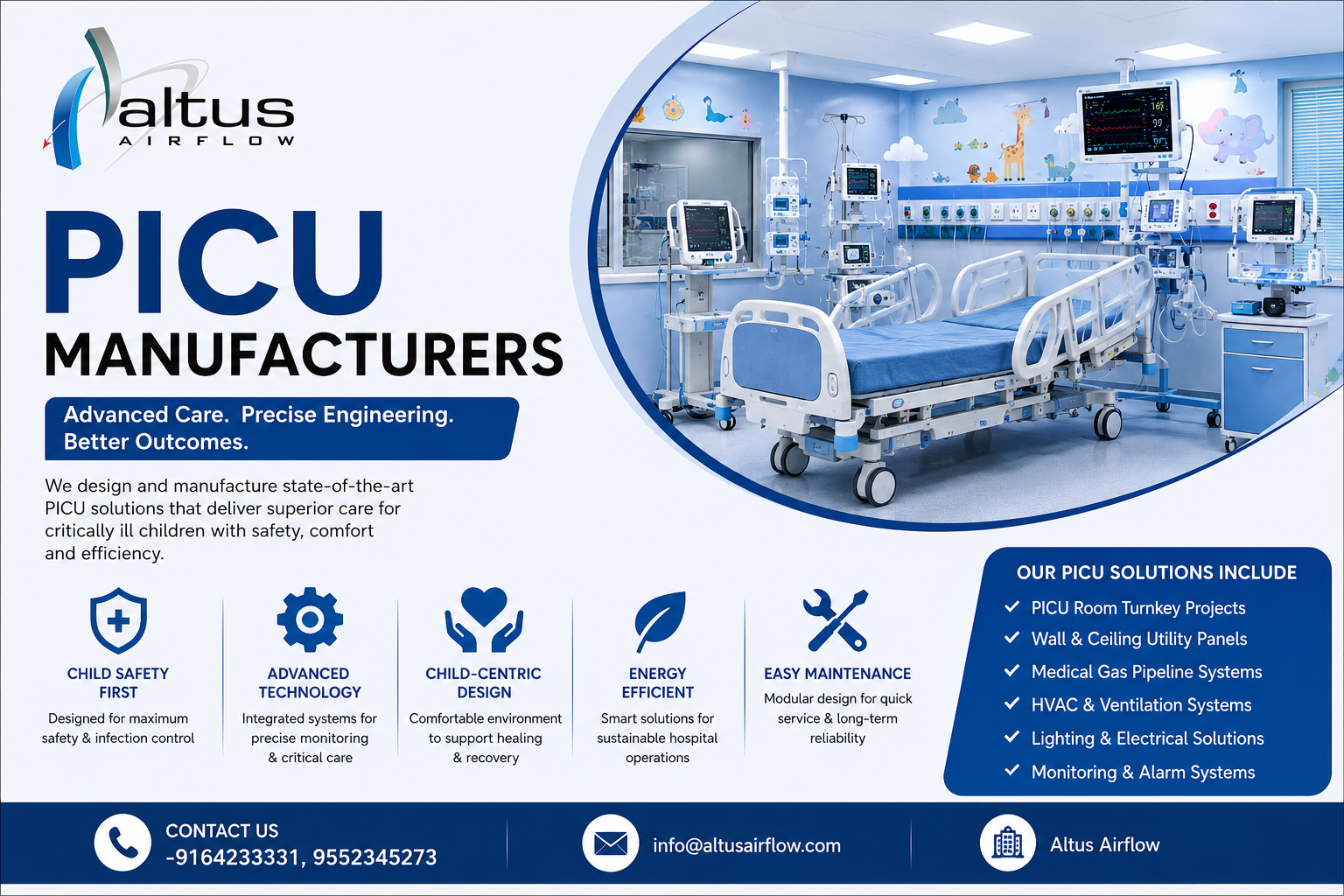
A Pediatric Intensive Care Unit (PICU) is a specialised hospital department designed to provide critical care to infants and children who require continuous medical attention. Developing this environment requires careful consideration of patient safety, clinical workflows, specialised equipment, ventilation, hygiene, and infrastructure. Hospitals planning a new pediatric critical care facility or upgrading an existing unit should carefully evaluate experienced PICU Manufacturers to ensure that the proposed infrastructure meets their operational requirements.
Unlike general hospital areas, a PICU must accommodate pediatric beds, monitoring equipment, ventilators, medical gas connections, electrical outlets, emergency facilities, and dedicated support spaces. Its layout should also allow healthcare professionals to access patients quickly while providing appropriate space for parents and caregivers.
Selecting a manufacturer involves more than reviewing a company's product range. Hospitals should assess its healthcare project experience, technical knowledge, design capabilities, material quality, equipment integration, and installation support. Understanding these qualities can help hospital administrators and project teams make informed decisions.
Understanding the Role of PICU Manufacturers
PICU manufacturers contribute to developing specialised pediatric critical care environments. Depending on the agreed project scope, their responsibilities may include infrastructure planning, modular installations, equipment interface coordination, utility integration, and technical support.
A properly planned PICU may include:
-
Dedicated pediatric patient care spaces.
-
Bedside medical gas and electrical connections.
-
Patient monitoring and equipment provisions.
-
Ventilation and temperature control systems.
-
Nursing stations and observation areas.
-
Clean and dirty utility rooms.
-
Isolation facilities where required.
-
Storage and emergency support areas.
-
Family waiting and counselling spaces.
The design should reflect the hospital's intended level of pediatric critical care, available space, patient capacity, and clinical services. Manufacturers should coordinate with hospital administrators, pediatric intensivists, biomedical engineers, architects, and other technical professionals during the planning process.
Important Qualities to Look for in Experienced PICU Manufacturers
1. Experience in Specialised Healthcare Infrastructure
One of the first qualities hospitals should evaluate is experience in healthcare infrastructure projects. Pediatric critical care environments have specific requirements that differ from adult ICUs and general hospital departments.
Hospitals should review the manufacturer's previous projects and determine whether it understands pediatric patient requirements, bedside utility arrangements, equipment positioning, and critical care workflows.
Relevant experience may include:
-
Pediatric intensive care infrastructure.
-
Modular hospital installations.
-
Critical care room planning.
-
Medical gas and electrical integration.
-
HVAC and ventilation coordination.
-
Specialised hospital equipment interfaces.
A manufacturer with relevant project experience may be better prepared to identify practical challenges during planning and installation.
2. Knowledge of Pediatric-Specific Design Requirements
A PICU should be designed around the needs of infants and children rather than simply adapting an adult ICU layout. Pediatric patients require specialised beds, monitoring arrangements, equipment, and appropriate access for medical professionals.
Hospitals should check whether the manufacturer understands the importance of age-appropriate infrastructure and suitable space around each patient bed.
The design should consider access to the patient's head for emergency airway management, room for portable medical equipment, and clear movement pathways for healthcare professionals.
The manufacturer should also understand that the requirements of a general pediatric critical care unit may differ from those of specialised pediatric services. The hospital's clinical team should establish the intended requirements before the infrastructure design is finalised.
3. Strong Space Planning and Layout Capabilities
A well-organised PICU layout supports patient observation, medical procedures, equipment access, and staff movement. Limited space or poorly positioned equipment can make critical care activities more difficult.
Hospitals should assess whether the proposed design provides:
-
Appropriate space around pediatric beds.
-
Clear access for emergency interventions.
-
Convenient positioning of medical equipment.
-
Visibility from the central nursing station.
-
Suitable staff work areas.
-
Dedicated clean and dirty utility spaces.
-
Accessible storage facilities.
-
Isolation rooms where clinically required.
The layout should also consider access to adjoining departments, such as emergency services, operation theatres, laboratories, and diagnostic facilities.
4. Understanding of Medical Gas and Bedside Utility Systems
Medical gas infrastructure is an essential part of a pediatric intensive care environment. Patient beds may require oxygen, medical air, suction, and other utility connections depending on the clinical requirements.
Hospitals should evaluate whether the manufacturer can coordinate the placement of bedside service panels, outlets, and equipment connections according to the approved layout.
Important considerations include:
-
Accessible oxygen and medical air outlets.
-
Suitable suction connections.
-
Adequate electrical outlets.
-
Compatibility with pediatric equipment.
-
Clear identification of utility connections.
-
Maintenance access to service panels.
Medical gas pipeline installation and testing should be performed by qualified specialists. The manufacturer should clearly explain how these systems will be coordinated within the overall project.
5. Expertise in Ventilation and Temperature Control
Pediatric critical care spaces require appropriate environmental control. Temperature, humidity, air circulation, and ventilation should be considered according to the unit's clinical functions.
Hospitals should check whether the manufacturer can coordinate with qualified HVAC professionals to plan suitable air-handling equipment, filtration, ducting, and temperature control provisions.
The design should also account for the different requirements of general patient areas and designated isolation rooms. Where specialised pressure relationships are needed, these should be established through the approved engineering design.
A suitable ventilation plan should provide practical access for inspection, filter replacement, and routine maintenance.
6. Focus on Infection Prevention and Hygiene
Infection prevention is particularly important in pediatric intensive care because patients may require specialised treatment and close monitoring.
The manufacturer should understand how material selection, room arrangement, and utility placement can support the hospital's infection-control procedures.
Hospitals should evaluate:
-
Smooth, non-porous, easy-to-clean surfaces.
-
Appropriate wall and floor finishes.
-
Properly finished panel joints.
-
Convenient hand hygiene facilities.
-
Separation of clean and contaminated materials.
-
Suitable waste management provisions.
-
Isolation room infrastructure where required.
Clean and dirty utility areas should be planned according to the hospital's operational requirements. Material and layout decisions should also involve the infection prevention team.
7. Ability to Integrate Pediatric Medical Equipment
A PICU requires specialised equipment to support patient monitoring, respiratory care, and other critical care activities.
Depending on the unit's level and clinical requirements, equipment may include:
-
Pediatric patient monitors.
-
Invasive and non-invasive ventilators.
-
Infusion and syringe pumps.
-
Defibrillators.
-
Pediatric beds and warmers.
-
Emergency equipment.
-
Portable diagnostic devices.
Hospitals should assess whether the manufacturer can coordinate the infrastructure with the equipment specifications provided by the biomedical department.
The design should consider equipment dimensions, electrical connections, mounting requirements, medical gas access, cable management, and maintenance clearance. This helps prevent conflicts between the planned infrastructure and the actual equipment.
8. Child-Friendly and Family-Conscious Design
A pediatric intensive care environment should consider the needs of children and their families alongside clinical functionality.
Where appropriate, the design can incorporate soothing colours, suitable lighting, visual comfort, and practical arrangements for family interaction. These features should be integrated without compromising cleaning requirements, safety, equipment access, or clinical workflows.
Hospitals should also consider nearby waiting and counselling spaces where parents can receive information and communicate with the healthcare team.
A thoughtful design can help create a more welcoming environment while maintaining the specialised requirements of critical care.
9. Quality of Materials and Modular Components
Materials used in a PICU should be suitable for regular hospital use, routine cleaning, and maintenance.
Hospitals should review the technical specifications of modular wall panels, ceilings, flooring, doors, service panels, and other supplied components.
The evaluation should include durability, cleanability, finishing quality, compatibility with equipment, and suitability for the intended clinical environment.
Manufacturers should provide relevant product documentation so that the hospital's engineering and project teams can assess the proposed materials before approval.
10. Project Management and Installation Capabilities
A PICU development project involves several activities, including design approval, procurement, site preparation, installation, utility coordination, testing, and handover.
Hospitals should select a manufacturer that can clearly explain its project management process and responsibilities.
The proposed plan should identify project milestones, installation schedules, technical approvals, contractor coordination, quality checks, and communication procedures.
A structured approach can help reduce confusion between different teams and make it easier for hospital administrators to monitor project progress.
11. Testing, Documentation, and After-Installation Support
Installation should be followed by appropriate inspections and testing before the PICU becomes operational. Hospitals should confirm that the relevant infrastructure systems have been checked against the approved specifications.
Depending on the project scope, testing may cover electrical connections, medical gas pipelines, HVAC performance, control systems, and equipment interfaces.
The manufacturer should clarify the handover documentation, which may include approved drawings, material specifications, test reports, warranty information, and maintenance instructions.
Hospitals should also discuss technical support, replacement components, and maintenance responsibilities to understand the level of assistance available after installation.
How Hospitals Can Evaluate and Select the Right PICU Manufacturer
1. Review Previous Healthcare Projects
Hospitals should request details of completed healthcare infrastructure projects and assess whether the manufacturer has handled similar pediatric critical care requirements.
Where possible, review project photographs, technical specifications, and client references. This can help demonstrate the manufacturer's practical experience and ability to coordinate specialised hospital installations.
2. Check Technical Knowledge and Documentation
A reliable manufacturer should be able to explain the proposed infrastructure, materials, installation methods, and technical specifications.
Hospitals should review relevant product documents, material details, equipment compatibility information, and applicable certifications. They should also involve their engineering and biomedical teams when evaluating technical proposals.
3. Compare Project Scope and Responsibilities
Before finalising a manufacturer, hospitals should understand which activities are included in the proposal. These may involve design, modular components, utility coordination, installation, testing, and commissioning.
Any activities assigned to other contractors should be clearly identified. This helps avoid confusion during execution and makes project responsibilities easier to manage.
4. Evaluate Customisation Capabilities
Every hospital has different clinical requirements, available space, and patient capacity. A manufacturer should be able to adapt the proposed infrastructure to the hospital's needs rather than relying on a standard layout for every project.
Customisation may involve bedside service arrangements, storage facilities, patient observation areas, equipment positioning, and isolation room provisions.
5. Understand Maintenance and Technical Support
Hospitals should discuss warranty terms, maintenance requirements, replacement components, and technical assistance before signing an agreement.
A clear support arrangement can help hospital engineering teams manage the installed infrastructure and plan routine inspections more effectively.
Why Child-Focused PICU Infrastructure Planning Matters
A pediatric intensive care environment should accommodate the clinical requirements of children while considering the needs of parents and healthcare professionals. Effective Child-Focused PICU Layout Planning helps organise patient beds, medical equipment, observation areas, utility connections, and family-support spaces within the available area.
The layout should also provide suitable access for emergency procedures and routine patient care. A well-coordinated plan can help reduce unnecessary movement, improve equipment accessibility, and support the hospital's daily clinical activities.
Common Mistakes to Avoid When Selecting PICU Manufacturers
Choosing a Manufacturer Based Only on Price
A low quotation does not necessarily indicate that a proposal covers all the required infrastructure. Hospitals should compare material quality, technical specifications, installation responsibilities, and support arrangements before making a decision.
Ignoring Pediatric-Specific Requirements
Using an adult ICU layout without considering pediatric needs can create difficulties with equipment positioning, patient access, and clinical workflows. The hospital's pediatric intensivists should participate in the design process.
Overlooking Equipment Integration
Infrastructure should be planned around the actual equipment specifications. Hospitals should share their biomedical equipment requirements before approving the final drawings.
Neglecting Infection-Control Considerations
Material selection, ventilation, hand hygiene facilities, and clean and dirty utility arrangements should be addressed during planning rather than treated as last-minute additions.
Failing to Clarify Installation and Handover Responsibilities
Hospitals should confirm who is responsible for each installation activity, inspection, testing, commissioning, and documentation requirement. This helps avoid gaps during project completion.
Conclusion
Selecting experienced PICU manufacturers requires careful evaluation of healthcare infrastructure knowledge, pediatric-specific design capabilities, space planning, medical gas integration, ventilation, infection prevention, and equipment coordination. Hospitals should also assess material quality, project management, installation procedures, documentation, and after-installation support before finalising their choice. Involving pediatric intensivists, biomedical engineers, and hospital infrastructure teams during the selection process can help ensure that the proposed facility addresses its clinical and operational requirements. Partnering with experienced PICU Manufacturers can help hospitals develop organised pediatric critical care environments with appropriately coordinated infrastructure.
Frequently Asked Questions
1. What services do PICU manufacturers provide?
PICU manufacturers may provide infrastructure planning, modular wall and ceiling installations, bedside utility coordination, equipment integration, ventilation coordination, and installation support. The exact services depend on the project scope and hospital requirements.
2. What should hospitals consider when selecting PICU manufacturers?
Hospitals should evaluate healthcare project experience, pediatric-specific design knowledge, layout planning, medical gas and electrical infrastructure, ventilation, material quality, equipment integration, and technical support.
3. Why is pediatric-specific PICU design important?
Pediatric patients have different equipment, monitoring, space, and care requirements from adult patients. A dedicated design helps accommodate these needs while supporting medical staff movement, patient observation, and emergency access.
4. What infrastructure is required in a modern PICU?
A modern PICU may require pediatric patient beds, monitoring equipment, ventilators, medical gas outlets, electrical connections, ventilation, emergency equipment, nursing stations, utility rooms, and isolation facilities where needed. The exact requirements depend on the unit's level of care and clinical services.
5. How can hospitals verify the reliability of a PICU manufacturer?
Hospitals can review previous projects, client references, technical specifications, material documentation, installation capabilities, equipment integration experience, and handover procedures. They should also clarify warranty and maintenance support before finalising the agreement.
Read Our Previous Blog-----------> How to Choose a Reliable Modular OT Turnkey Project Company for Hospitals?