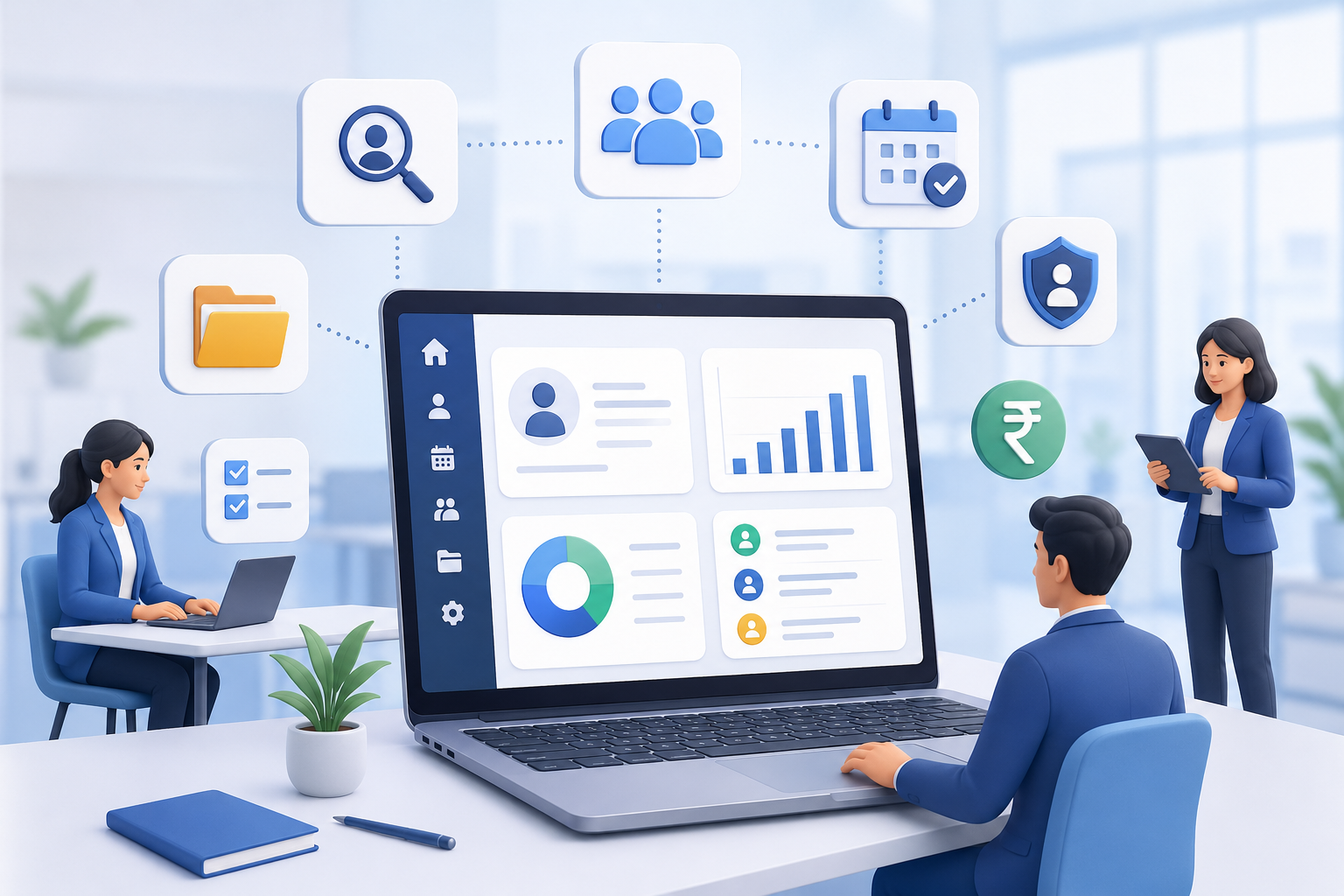

Managing employees involves many connected responsibilities, from recruitment and onboarding to attendance, leave, salary processing, and performance reviews. When these activities are handled through separate tools, teams may spend considerable time transferring information and checking records. Different versions of employee data can also create confusion, particularly when organizations expand across departments or locations.
Implementing HR and Payroll software can help businesses coordinate employee administration and salary processing through a connected digital environment. Instead of repeatedly entering the same information, authorized teams can work with consistent records and structured workflows. This can reduce administrative effort while improving visibility into important workforce activities.
Understanding the Relationship Between HR and Payroll
Human resources maintains information about employees, including joining dates, designations, departments, compensation changes, leave balances, and employment status. Payroll uses relevant information to calculate earnings, deductions, and net salaries.
These responsibilities are closely connected. A new employee must be added correctly before salary processing begins. An approved compensation change may affect the next payroll cycle, while unpaid leave may influence salary calculations according to company policy.
When information is updated manually across separate systems, important changes can be missed. A connected platform helps coordinate these updates and provides a clearer process for reviewing them.
Key Features of an Integrated System
Centralized Employee Records
A central employee database stores important information in an organized format. Depending on the platform, records may include personal details, job information, employment documents, reporting relationships, and salary structures.
Authorized administrators can update records while maintaining appropriate access permissions. This reduces duplicate entries and helps teams find accurate information more quickly.
Companies should establish procedures for verifying information and updating records whenever an employee's circumstances change.
Attendance and Leave Management
Attendance records provide important inputs for workforce planning and, where relevant, payroll calculations. A digital attendance module can track working hours, absences, late arrivals, overtime, and shift schedules according to configured policies.
Employees can submit leave requests online, and managers can approve or reject them through defined workflows. Approved leave information can then be reflected in relevant employee records.
For organizations with different locations or working arrangements, centralized reports can help identify attendance patterns and staffing requirements.
Salary Processing and Payslips
Payroll functions help administrators manage earnings, deductions, salary revisions, and net payments. A connected system can use approved employee and attendance information to reduce repetitive data entry.
It may also generate payslips, payroll summaries, and reports required for internal review. Before salaries are finalized, administrators should verify exceptions, changes, and calculations.
Indian organizations must assess the statutory requirements applicable to their workforce, including relevant provident fund contributions, employee state insurance, tax deductions, and other reporting obligations. Software configuration should be reviewed as applicable rules change.
Recruitment and Onboarding
Recruitment tools help manage vacancies, applications, interviews, and candidate communication. Once a candidate accepts an offer, onboarding workflows can organize document collection, joining formalities, and internal task assignments.
Connecting onboarding with employee records can reduce the need to enter information again when the new employee joins. It also helps HR teams maintain a more consistent transition from recruitment to employment.
Employee Self-Service
Employees often contact HR for payslips, leave balances, personal information updates, and attendance corrections. A self-service portal allows them to access relevant information and submit requests independently.
This can reduce routine enquiries and help employees understand the status of their requests. Mobile access is particularly useful for teams that work across branches, customer sites, or different shifts.
Business Benefits of Connecting HR and Payroll
Less Manual Work
A connected system reduces repeated data entry and helps standardize recurring administrative activities. HR and finance teams can spend less time gathering information and more time reviewing important exceptions.
Improved Data Consistency
When authorized updates are reflected across connected modules, the likelihood of conflicting employee records can decrease. Approval workflows and audit trails provide additional visibility into important changes.
Better Management Reporting
Managers need accurate information to understand workforce costs, staffing levels, attendance trends, and employee turnover. Consolidated reports can help decision-makers review relevant information without combining multiple spreadsheets.
The usefulness of these reports depends on data quality, appropriate configuration, and regular review.
Support for Business Growth
As a company expands, it may add employees, branches, departments, or new approval requirements. A scalable platform can help maintain consistent processes across these changes.
Organizations should select a system that supports their current needs while offering practical options for future expansion.
Choosing a Suitable Platform
Businesses should begin by identifying their most time-consuming administrative tasks and the information that currently moves between departments.
Evaluate potential solutions using the following criteria:
-
Integration: Check whether employee records, attendance, leave, and payroll work together effectively.
-
Compliance support: Verify that the system accommodates relevant statutory requirements.
-
Data security: Review user permissions, backups, audit trails, and information protection measures.
-
Ease of use: Ensure that employees, managers, HR staff, and finance teams can complete their responsibilities efficiently.
-
Reporting: Confirm that available reports support operational and financial decisions.
-
Implementation: Understand data migration, training, configuration, and support arrangements.
-
Pricing: Compare setup charges, recurring costs, optional modules, and future expansion expenses.
A live demonstration can help confirm whether the platform handles realistic situations, such as employee transfers, salary revisions, unpaid leave, and new joiners.
How to Implement the System Successfully
Begin by reviewing employee records and removing outdated or duplicate information. Confirm salary structures, attendance rules, leave policies, approval hierarchies, and statutory settings before importing data.
Introduce the platform in manageable stages. Train employees and managers on the tasks they need to complete, while giving administrators more detailed guidance on payroll and reporting.
During the first few payroll cycles, compare system outputs with verified records and investigate discrepancies before final approval. Collect feedback from users and make adjustments where necessary.
Regular reviews should continue after implementation. Updated policies, organizational changes, and applicable regulatory requirements may require changes to system settings and workflows.
Conclusion
Connecting employee administration with salary processing helps businesses reduce fragmented workflows and maintain more consistent information. The greatest value comes from combining suitable technology with accurate records, clear responsibilities, and careful review.
Before choosing a platform, organizations should assess their requirements, security expectations, support needs, and long-term budget. With effective planning and ongoing maintenance, HR Software India businesses can use can help simplify workforce administration, improve payroll coordination, and support more informed decisions as their organizations grow.