


How Digital Transformation in Business Drives Growth
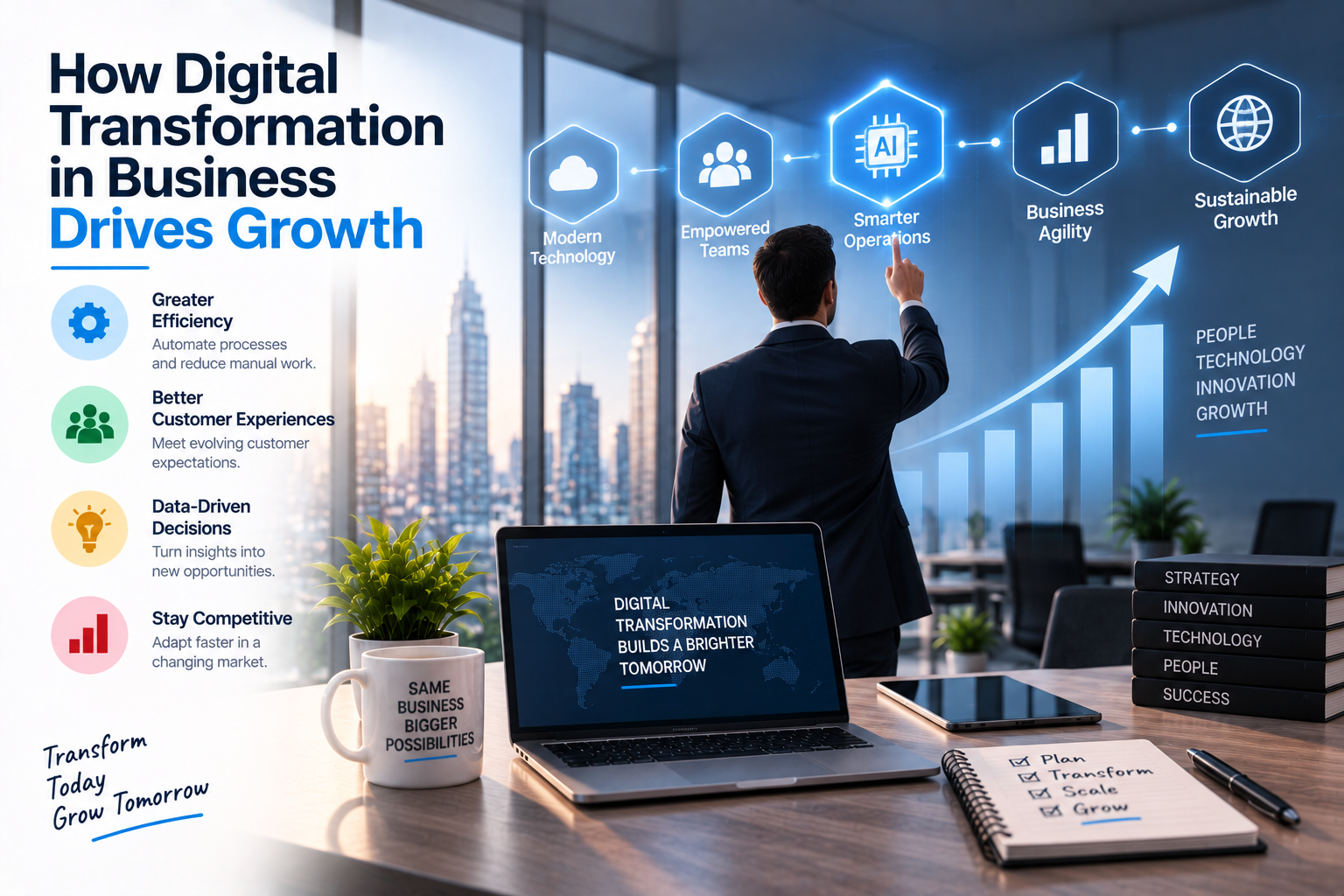
Businesses today are under pressure to move faster, serve customers better, and control costs at the same time. Traditional processes can make that difficult. This is where digital transformation in business becomes important. It is not simply about buying new software or replacing old computers. It means using modern technology to improve how a company operates, communicates, sells, and delivers value.
Think about a business that still depends heavily on spreadsheets, manual approvals, and disconnected systems. Even a good team can lose hours every week doing repetitive work. With the right digital strategy, many of these tasks can be automated. The result? Employees have more time for work that actually grows the business.
What Is Digital Transformation in Business?
Digital transformation in business is the process of using digital technologies to improve business operations, customer relationships, decision-making, and overall performance. It can involve cloud computing, artificial intelligence, data analytics, automation, cybersecurity, mobile applications, and modern enterprise platforms.
But technology alone is not the goal. The real goal is business improvement. A successful transformation connects technology with a company's objectives and the needs of its customers.
For example, a retailer may introduce an online ordering system, while a service company might move its customer records to a cloud platform. A manufacturing company could use analytics and connected systems to identify production problems before they become expensive.
How Digital Transformation Supports Business Growth
Growth becomes easier when businesses can operate efficiently. Modern technology helps reduce manual processes, improve communication, and give managers access to useful information.
Automation is one clear example. Repetitive activities such as reporting, customer notifications, data entry, and approval workflows can often be automated. Employees can then focus on strategy, sales, creative work, and customer relationships.
Cloud technology also makes a difference. Teams can access business applications and information from different locations, which supports flexible working and faster collaboration. Companies can scale their technology resources as their requirements change instead of constantly investing in physical infrastructure.
This flexibility can be especially valuable for growing organizations. They can experiment, adjust, and respond to market changes without rebuilding their entire technology environment.
The Role of Technology Transformation Services
Many companies know they need to modernize but are unsure where to begin. This is where technology transformation services can provide practical support. These services can help businesses assess existing systems, identify technology gaps, plan modernization projects, and implement suitable digital solutions.
A good transformation strategy should not start with, “Which technology should we buy?” It should start with, “What problem are we trying to solve?”
That small change in thinking matters.
Businesses may need better data management, faster applications, stronger cybersecurity, cloud migration, software integration, or automated workflows. Professional technology specialists can help connect these requirements with the right technical approach.
Improving Customer Experience Through Digital Transformation
Customers expect quick responses, simple processes, and consistent service. A slow website or complicated buying process can send potential customers somewhere else. No drama. They simply leave.
This is why developer staff augmentation has become an important part of modern business strategy. Companies can use customer data, CRM platforms, chat systems, mobile applications, and personalized digital services to create smoother interactions.
For instance, a customer may want to check an order, contact support, or update account information without making a phone call. A well-designed digital platform can make that possible within minutes.
Better customer experiences can lead to stronger satisfaction and repeat business. Over time, this supports customer retention and revenue growth.
Data Helps Businesses Make Better Decisions
Another major advantage of digital modernization is access to better data. Older systems may store information across different departments, making it difficult to understand what is really happening.
Integrated platforms can bring information together and make it easier to analyze. Business leaders can identify sales patterns, customer preferences, operational delays, and other trends.
This changes decision-making. Instead of relying entirely on assumptions, managers can use current information to guide important choices. Data analytics, dashboards, artificial intelligence, and reporting tools can all contribute to this process.
Building a More Agile Business
Markets change quickly. A company that takes months to respond to a new customer demand may lose opportunities to a faster competitor.
Digital transformation helps organizations become more agile. Cloud platforms, automated workflows, modern software development, and integrated communication tools allow teams to respond more quickly.
For technology-driven organizations, solutions such as DevOps services in Lahore can also support faster software delivery, continuous testing, deployment, and collaboration between development and operations teams.
The point is not to use every new technology available. That can create more problems than it solves. Instead, companies should choose technologies that make their operations faster, smarter, and easier to manage.
Digital Transformation and Long-Term Competitiveness
Transformation is not a one-time project. Technology keeps changing, customer expectations keep evolving, and competitors continue improving their services.
Successful companies therefore treat digital transformation as an ongoing process. They regularly review their systems, collect feedback, improve customer journeys, and look for opportunities to automate or simplify operations.
Employee training is equally important. Even excellent technology will not deliver results if employees do not understand how to use it. Organizations should give teams enough training, support, and time to adapt.
Conclusion
Digital transformation in business can create meaningful opportunities for efficiency, innovation, customer satisfaction, and sustainable growth. From cloud computing and automation to data analytics and modern software, the right technology can remove unnecessary complexity and help businesses work smarter.
However, transformation should always be connected to real business objectives. Technology for the sake of technology rarely delivers lasting value. A thoughtful strategy, skilled people, secure systems, and continuous improvement are what turn digital investment into business results.
For companies looking to modernize their operations, Chromeis can be part of that journey by helping organizations explore technology-driven solutions designed around practical business needs. The process may start with one system or one problem. Over time, those improvements can create a much stronger and more competitive business.
Frequently Asked Questions
1. What is digital transformation in business?
Digital transformation in business means using modern digital technologies to improve operations, customer experiences, decision-making, and business performance. It can include cloud computing, automation, analytics, AI, cybersecurity, and software modernization.
2. Why is digital transformation important for business growth?
It can help businesses reduce manual work, improve productivity, understand customers, make data-driven decisions, and respond faster to market changes. These improvements can support long-term growth and competitiveness.
3. How does technology improve customer experience?
Technology can make customer interactions faster and more convenient through online services, CRM platforms, mobile applications, automation, personalized communication, and self-service options.
4. What are technology transformation services?
Technology transformation services help businesses plan and implement technology improvements. Depending on business requirements, they may include cloud migration, software modernization, system integration, automation, data solutions, and technology consulting.
5. Is digital transformation only for large companies?
No. Businesses of different sizes can benefit from digital transformation. Smaller companies can start with focused improvements such as cloud software, automated workflows, customer management systems, or better data tools, then expand their digital strategy as they grow.
eSIMcho | Global eSIM & No Roaming

 Български
 Russian