


What Driving Examiners Look For During a Test
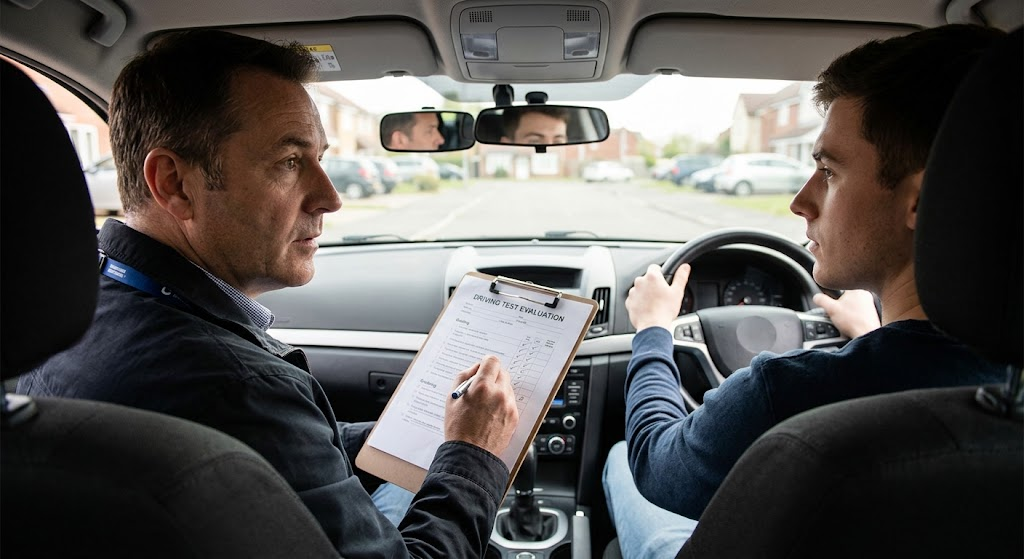
Passing a driving test is about much more than simply knowing how to move a car. During the test, an examiner is assessing whether you can drive safely, responsibly, and independently in real-world traffic. They want to see that you understand the rules of the road, make sensible decisions, remain aware of your surroundings, and stay in control even when something unexpected happens. Understanding what examiners pay attention to can help you prepare with greater confidence and avoid mistakes that could cost you a pass.
For learners preparing with Driving Lessons Richmond, knowing what happens behind the examiner's clipboard can make practice sessions much more focused. Instead of simply trying to “drive perfectly,” you can concentrate on the skills that demonstrate safe and responsible driving. The examiner is not usually looking for perfection; they are looking for consistent habits, good judgment, and evidence that you can handle everyday driving without constant guidance.
What Is the Examiner Really Assessing?
A driving test is designed to answer one main question: Can you drive safely and independently?
Your examiner watches how you interact with the road, other drivers, pedestrians, cyclists, signs, signals, and your vehicle. They are also interested in what you do before a potential hazard becomes a problem.
For example, if you approach a pedestrian crossing and immediately slow down because someone is waiting nearby, that shows anticipation and awareness. If you only react after the pedestrian steps into your path, you may have demonstrated weaker hazard perception.
Examiners generally assess several connected areas:
- Vehicle control
- Observation
- Speed management
- Road positioning
- Use of mirrors
- Signalling
- Response to hazards
- Junctions and intersections
- Manoeuvres
- Independent decision-making
- Compliance with traffic laws
- Overall safety and awareness
The important point is that these skills are not judged in isolation. Good driving comes from combining them naturally.
Observation and Awareness
One of the most important things an examiner looks for is whether you are aware of what is happening around your vehicle.
This includes checking:
- Mirrors regularly and appropriately
- Blind spots when necessary
- Pedestrians near the road
- Cyclists and motorcyclists
- Vehicles approaching from different directions
- Road signs and markings
- Potential hazards ahead
- Changes in traffic conditions
Good observation should be purposeful rather than mechanical. You should not simply move your eyes toward the mirrors because you think the examiner is watching. Your checks should help you understand what is happening around you.
Looking Ahead
Strong drivers do not focus only on the vehicle directly in front of them. They scan further ahead and identify developing situations.
If traffic is slowing several cars ahead, for instance, you should notice it early and adjust your speed smoothly. This gives you more time to respond and reduces the need for sudden braking.
Mirror Use
Mirror checks are another major part of the assessment.
Examiners want to see that you know when it is necessary to check your mirrors and that you actually use the information you obtain from them.
Mirror checks are especially important before:
- Changing speed significantly
- Changing direction
- Changing lanes
- Moving around parked vehicles
- Turning
- Overtaking
- Pulling away
- Stopping
- Moving back into a lane
A common mistake is checking mirrors too late. Ideally, you should develop the habit of checking your surroundings before making a change.
For example, if you intend to move around a parked car, check your mirrors before steering out. This helps you determine whether another road user is approaching from behind.
Speed Control and Judgment
Driving at an appropriate speed does not mean driving as slowly as possible.
An examiner wants to see that you can select a safe speed based on the road, weather, traffic, visibility, and hazards.
You should be able to:
- Follow speed limits
- Reduce speed when conditions require it
- Avoid driving unnecessarily slowly
- Adjust speed before bends and junctions
- Respond appropriately to pedestrians and cyclists
- Maintain a safe speed around parked vehicles
Why Speed Isn't Just About the Speed Limit
Imagine you are driving on a road with a posted limit, but there are parked cars, poor visibility, pedestrians nearby, and vehicles emerging from side roads. Simply staying at the maximum permitted speed may not demonstrate appropriate judgment.
A good driver understands that the speed limit is a legal maximum, not a target that must always be reached.
Road Positioning
Your position on the road tells the examiner a lot about your awareness and control.
You should normally maintain an appropriate position within your lane while allowing enough space from hazards. Poor positioning can make it difficult for other road users to understand your intentions and may create unnecessary risks.
Examiners may pay attention to how you position yourself when:
- Approaching junctions
- Turning
- Passing parked vehicles
- Driving on narrow roads
- Changing lanes
- Navigating roundabouts
- Preparing for a manoeuvre
Good positioning should feel deliberate rather than forced.
Junctions and Intersections
Junctions are common areas where learners make mistakes because several skills have to work together.
At a junction, an examiner may be watching your:
- Speed
- Mirror use
- Observation
- Road position
- Signal use
- Gap selection
- Awareness of pedestrians and cyclists
Don't Rush Your Decisions
A frequent problem is trying to enter a junction too quickly because the learner feels pressure to keep traffic moving.
Instead, take the time necessary to assess the situation safely. However, excessive hesitation can also become a problem if a safe opportunity is clearly available.
The goal is safe, confident decision-making.
Signalling Correctly
Signals should communicate your intentions clearly to other road users.
Examiners want to see that you signal when appropriate and avoid signalling when it could create confusion.
A signal should not be treated as an automatic step that happens every time you turn the steering wheel. Its purpose is communication.
For example, when approaching a junction, consider whether another road user would benefit from knowing that you intend to turn. Your signal should be timely and should not mislead people into thinking you are taking a different route.
Traffic Signs and Road Markings
Knowing traffic signs is important, but your examiner is also interested in whether you respond appropriately to them.
You should recognize and obey:
- Speed-limit signs
- Stop and give-way instructions
- Lane markings
- No-entry signs
- Parking restrictions
- Direction signs
- Pedestrian crossings
- Road arrows and other markings
You should also pay attention to temporary signs and changes in road layout. Roadworks can require you to adjust your normal driving routine, so staying alert is essential.
Hazard Awareness
A good driver sees hazards early and responds before they become dangerous.
Potential hazards include:
- Children near the road
- People stepping between parked cars
- Cyclists
- Motorcyclists
- Buses pulling away
- Animals
- Emergency vehicles
- Vehicles emerging from driveways
- Sudden traffic queues
- Narrow roads
- Poor weather conditions
The examiner is looking for anticipation.
If you see a ball roll into the road, for example, you should consider that a child might follow it before actually seeing the child. Reducing speed early demonstrates awareness and forward planning.
Vehicle Control
You also need to demonstrate that you can control the vehicle smoothly and safely.
This includes:
- Steering
- Braking
- Acceleration
- Gear selection where applicable
- Clutch control in manual vehicles
- Starting and stopping
- Moving away safely
- Maintaining control on slopes
Smoothness matters because it reflects planning. Harsh braking and sudden acceleration can suggest that decisions are being made too late.
That does not mean every action must be perfectly smooth. Unexpected situations happen. What matters is that you remain in control and respond safely.
Manoeuvres
Driving tests commonly include one or more practical manoeuvres. These may involve reversing or positioning the vehicle accurately.
During a manoeuvre, the examiner is not simply checking whether you finish in exactly the right place. They are also observing whether you:
- Check your surroundings
- Move at an appropriate speed
- Maintain control
- Respond to hazards
- Make effective observations
- Correct your position when necessary
If you realize your vehicle is not positioned correctly, making a safe correction is generally better than continuing simply because you are afraid of making another movement.
Independent Driving
Examiners want to know that you can make decisions without being guided through every step.
During an independent-driving section, you may need to follow directions, road signs, or another form of navigation.
The key is not memorizing a particular route. It is demonstrating that you can:
- Listen carefully to instructions.
- Understand where you need to go.
- Observe signs and road markings.
- Make safe decisions.
- Continue driving if you make a minor navigational mistake.
If you miss a turning because you misunderstood an instruction, do not panic. Do not suddenly change direction or perform an unsafe manoeuvre. Continue safely and follow the examiner's next instruction.
How Examiners View Mistakes
Many learners assume that making one mistake automatically means failing.
In reality, driving assessments generally distinguish between minor issues and mistakes that create serious safety concerns. The exact classification and pass requirements depend on the licensing authority and test system in your area.
The important lesson is not to let one mistake trigger several more.
Suppose you stall the vehicle. Take a breath, regain control, check your surroundings, and continue safely. Spending the rest of the test worrying about the stall can cause you to lose concentration.
Safety Comes First
If you make an error, your priority should always be correcting the situation safely.
A calm recovery can demonstrate maturity and control. Panicking can turn a small mistake into a much bigger problem.
What Examiners Don't Want to See
Understanding common negative behaviors can be just as useful as knowing what to do correctly.
Examiners may become concerned when a learner:
- Ignores mirrors
- Fails to notice obvious hazards
- Drives too fast for conditions
- Hesitates unnecessarily at safe opportunities
- Changes direction without proper observation
- Uses signals incorrectly
- Gets too close to other road users
- Loses control of the vehicle
- Ignores signs or road markings
- Becomes visibly distracted by mistakes
The best preparation is not trying to “act like you are being tested.” Instead, build safe habits that become automatic.
How to Prepare for What Examiners Look For
The most effective preparation is regular, focused practice.
Ask your instructor to assess you specifically on the areas examiners observe. Rather than spending every lesson simply driving around, dedicate time to weaknesses such as junctions, roundabouts, mirror routines, parking, or independent decision-making.
You can also practice asking yourself questions while driving:
What can I see?
What might happen next?
What could be a hazard?
Who needs to know what I am doing?
Is my speed appropriate?
Have I checked before changing direction or position?
These questions encourage the kind of forward-thinking that examiners want to see.
Final Thoughts
A driving test is not really about impressing the examiner. It is about demonstrating that you can make safe, sensible decisions when you are behind the wheel without someone constantly correcting you. Examiners look closely at observation, mirror use, speed, road positioning, hazard awareness, vehicle control, signalling, junction handling, manoeuvres, and independent decision-making. When these skills become natural habits, the test becomes far less intimidating.
If you are preparing for your test, use every lesson as an opportunity to improve the areas that matter most. Practicing with clear goals and learning from mistakes can make a significant difference to your confidence and performance. With consistent preparation and the right guidance from a reputable instructor or Benche Driving School, you can approach test day feeling prepared rather than hoping everything goes perfectly.

 Български
 English