


Why Bar Mop Towels Are Essential in Busy Food Service Environments
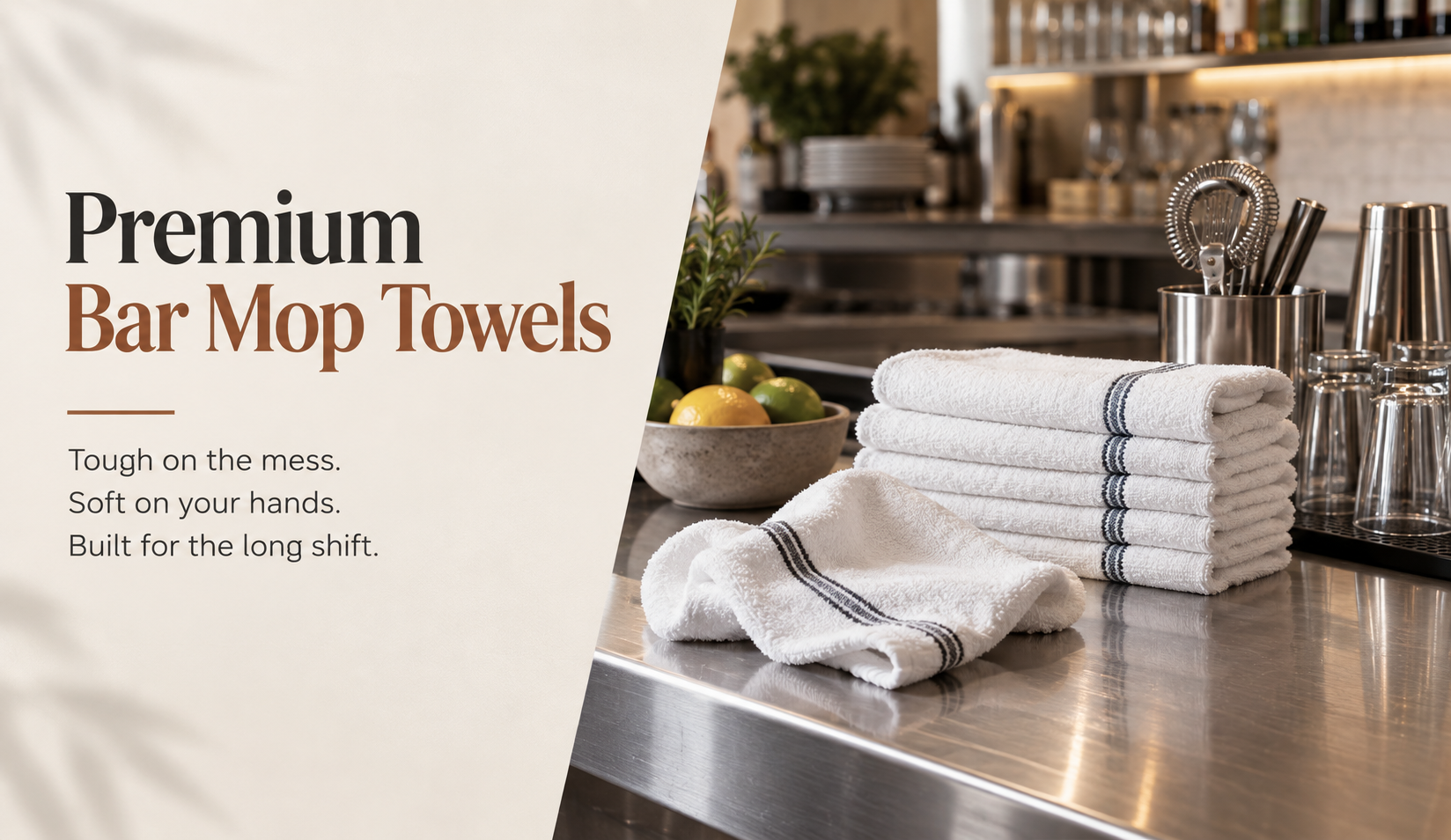
A busy restaurant rarely slows down because of one dramatic problem. More often, small operational issues pile up: a wet prep counter, a drink spill near the service station, grease around a work surface, or staff searching for a clean towel during the dinner rush. When those moments repeat dozens of times in a shift, something as simple as the right cleaning towel becomes part of daily efficiency.
That is where Bar Mop Towels earn their place. Restaurants, cafés, bars, bakeries, catering kitchens, and other food service operations use them because they combine absorbency, manageable size, easy laundering, and practical everyday handling. They do not replace proper sanitation procedures, but they help staff manage routine wiping and cleanup tasks without reaching for disposable products every few minutes.
The real value comes from consistency. When a kitchen keeps enough clean, suitable towels in circulation, staff can respond to spills and routine cleaning quickly without disrupting the flow of service.
Why Busy Food Service Operations Depend on Reliable Towels
Food service teams work around liquids, food residue, grease, condensation, and constant movement. A countertop that looks clean at opening can require attention repeatedly throughout a single service period.
Bar mop towels give staff a reusable tool for those frequent cleaning jobs. Their compact size makes them easier to keep near workstations than oversized kitchen towels, while their absorbent construction helps them handle moisture efficiently.
Small Cleaning Tasks Add Up During a Shift
One spilled drink may not affect an operation much. Twenty small spills, damp counters, and quick wipe-downs during lunch and dinner can.
Employees need something they can grab quickly without stopping their normal workflow. Commercial kitchen towels support these small but constant tasks, especially around beverage stations, prep areas, counters, and service zones.
A common mistake involves keeping too few towels available. Staff then reuse heavily soiled cloths longer than they should or waste time searching for replacements. Building enough clean towel inventory into the daily routine helps prevent that problem.
The Right Towel Supports Workflow, Not Just Cleanup
Restaurant managers often think about towels as a supply expense. A better way to look at them is as part of the operating system.
A useful towel sits where staff need it, absorbs moisture effectively, withstands repeated laundering, and returns to service without becoming difficult to handle. When these basic qualities line up, employees spend less time working around the towel itself.
That difference may sound small, but busy kitchens depend on dozens of small efficiencies working together.
What Makes Bar Mop Towels Different From Ordinary Kitchen Towels?
Not every towel performs the same job well. Decorative kitchen towels, oversized bath linens, microfiber cloths, and bar mops each behave differently under commercial conditions.
Bar mop towels generally focus on function rather than appearance. Their size, terry construction, absorbency, and repeat-use design make them particularly practical for food service environments.
Compact Size Makes Them Easier to Use
Large towels can become cumbersome around tight prep counters or service stations. A smaller bar towel gives employees enough material to wipe a surface without carrying excessive fabric.
That size also makes storage easier. Restaurants can keep clean stacks near appropriate work areas, move used towels into designated containers, and replenish supplies throughout the day.
For operations with limited workspace, this practical footprint matters more than decorative appearance.
Terry Construction Helps With Absorbency
Many bar mop towels use looped terry construction because the loops increase the surface area available to collect moisture. This structure works well for wiping water, condensation, and many everyday spills.
Absorbency alone does not determine towel quality, though. A towel also needs reasonable drying performance, durable stitching, and enough structure to survive frequent commercial washing.
A very heavy towel may absorb more initially but can also take longer to dry. Food service operators should balance absorbency with laundry turnaround and usage frequency.
Bar Mop Towels Help Manage High-Frequency Cleanup
Restaurants rarely deal with just one type of mess. Beverage areas create moisture. Prep work leaves small food residues. Kitchens generate splashes. Front-of-house areas may need quick attention between guests.
Keeping appropriate wiping cloths available allows teams to manage these situations before they interfere with service.
Beverage Stations Need Constant Attention
Coffee bars, soda stations, cocktail areas, and server stations often experience condensation and small spills throughout the day.
A compact absorbent towel works well here because employees can quickly wipe moisture before it spreads across counters or reaches the floor. That improves both presentation and day-to-day workflow.
Teams should still separate towel uses appropriately. A cloth used for one type of cleaning task should not move casually into another area where cross-contamination could become a concern.
Prep Areas Create Different Cleaning Demands
Prep counters may need frequent wiping between tasks. Staff often work with vegetables, sauces, ingredients, containers, and utensils within a limited workspace.
Bar mop towels can support routine surface management, but businesses should establish clear procedures for when staff must replace used towels and how they handle sanitation.
The towel itself does not create a hygienic process. Good handling, replacement frequency, laundering, and staff practices determine whether the system works properly.
Towel Rotation Matters More Than Many Businesses Expect
One of the easiest ways to create towel problems is to treat every cloth as interchangeable.
Busy kitchens need a rotation system that separates clean towels, active-use towels, and used towels. Without that structure, employees may keep using one cloth long after they should replace it.
Keep Enough Towels in Circulation
Managers should estimate towel requirements based on daily traffic, number of workstations, operating hours, and laundry frequency.
A small café may need a very different inventory from a hotel kitchen or high-volume restaurant. Buying based only on staff headcount can lead to shortages because multiple stations may require towels simultaneously.
A more useful approach looks at towel consumption by shift. Track how many clean pieces enter service, how many move to laundry, and how often staff run short.
Create Simple Workstation Rules
Complicated linen procedures often fail during busy service. Employees need a system they can follow quickly.
For example, a facility can designate different towel groups for beverage stations, general cleaning, and other approved tasks. Some operations use color coding to make separation easier, while others rely on labeled storage areas.
The exact system matters less than consistency. Staff should know which towels belong where and when they need replacement.
Laundering Has a Major Effect on Towel Performance
Commercial towels do not stay useful just because they started with good construction. Washing and drying practices affect softness, absorbency, shrinkage, and lifespan.
Frequent high-temperature laundering, excessive drying, unsuitable chemical use, or overloaded machines can change how towels perform over time.
Shrinkage Can Change Size and Handling
Cotton textiles can shrink after laundering, particularly when heat and drying practices place repeated stress on the fibers. Buyers sometimes focus on the towel's original dimensions without considering how it will behave after multiple wash cycles.
We recommend considering real operating conditions rather than judging towels only when they are new. Our guide to bar mop towel shrinkage explains why this happens and how laundering choices can affect the result.
Managers should also watch for changes in shape, stitching, absorbency, and fabric condition. These signs often provide more useful information than age alone.
More Detergent Does Not Automatically Mean Cleaner Towels
Teams sometimes respond to heavy soil by using more detergent than necessary. That approach can leave residues in fabric when the wash process does not rinse effectively.
Residue may affect towel feel and absorbency. Proper dosing, suitable wash cycles, machine capacity, and thorough rinsing all deserve attention.
Commercial laundering works best when businesses follow textile-care guidance and equipment recommendations instead of relying on guesswork.
How Bar Mop Towels Can Help Control Operating Costs
Restaurants constantly balance quality against operating expense. Disposable wiping products may seem convenient, but frequent use can create recurring purchasing and waste costs.
Reusable towels create a different cost model. Businesses purchase inventory, wash it repeatedly, replace damaged pieces, and manage laundry.
Unit Price Tells Only Part of the Story
A very inexpensive towel that loses shape or absorbency quickly may cost more over time than a slightly better option that survives repeated use.
Procurement teams should consider:
-
Initial unit cost
-
Expected laundering frequency
-
Fabric construction
-
Drying requirements
-
Replacement frequency
-
Storage requirements
-
Typical use per shift
These factors provide a more useful picture of lifetime value than purchase price alone.
Overbuying Can Also Create Waste
More inventory does not always mean better operations. Excess towels require storage and can tie up purchasing budget unnecessarily.
The goal is to maintain enough clean stock to cover normal demand, peak periods, laundry turnaround, and a reasonable backup supply.
Tracking real usage for several weeks gives managers better information than relying on a generic towel-per-employee formula.
Choosing Bar Mop Towels for a Commercial Kitchen
A restaurant purchasing towels should begin with how staff will actually use them. Product specifications matter, but they only make sense when tied to the work environment.
A high-volume bar may prioritize absorbency and fast turnover. A catering operation may care more about transport, storage, and maintaining enough clean inventory for off-site events.
Consider Material and Construction
Cotton bar mop towels remain common because cotton offers useful absorbency and a familiar textile feel. Blended fabrics may behave differently depending on their construction.
Instead of choosing solely by fiber name, review the complete product specification. Weight, weave, stitching, size, and intended commercial application all influence performance.
Buyers should also consider how their laundry process will interact with the material.
Match the Size to the Job
A towel that feels convenient at one workstation may feel too small or too large at another.
Compact towels generally suit quick counter wiping and beverage areas. Larger pieces may make sense when staff need more coverage or handle larger amounts of moisture.
Testing a small quantity in the real work environment can help businesses understand whether a particular size fits their operation.
Plan for Replacement Before Problems Appear
Towels eventually wear out. Edges can fray, fibers can flatten, staining can accumulate, and absorbency may decline.
Waiting until most inventory reaches poor condition at the same time creates unnecessary purchasing pressure. A simple replacement schedule allows managers to remove worn pieces gradually.
This approach also makes budgeting more predictable.
Common Bar Mop Towel Mistakes in Food Service
Many towel problems come from operations rather than the product itself.
Restaurants can avoid unnecessary replacement and workflow problems by paying attention to a few recurring mistakes.
Using One Towel for Too Many Tasks
A towel should not move freely between unrelated cleaning activities. Separate uses according to the facility's hygiene and sanitation procedures.
Clear storage, color coding, or workstation assignment can help employees maintain that separation during busy periods.
Keeping Towels in Service Too Long
Staff may continue using a towel because it still looks usable. Appearance alone does not tell the full story.
Businesses need clear rules for replacing soiled or inappropriate towels during the shift. Managers should make clean replacements easy to access so employees have no reason to stretch usage unnecessarily.
Ignoring Laundry Capacity
A restaurant can purchase excellent towels and still experience shortages if laundry turnaround cannot keep pace with consumption.
Before determining inventory, calculate how often laundry runs and how long towels remain unavailable between collection, washing, drying, folding, and restocking.
This operational detail often reveals why a facility keeps running out despite owning a seemingly large towel supply.
How to Build a Practical Bar Mop Towel System
The best towel program does not need complicated software or detailed reporting.
Start with a simple baseline: identify each workstation that needs towels, estimate daily usage, track laundry turnaround, and note when shortages occur.
Then adjust inventory around real patterns rather than assumptions.
Review Usage During Peak Service
Monitor towel consumption during the busiest hours, not just slow periods. Friday dinner may reveal problems that Tuesday lunch never shows.
Ask staff where they run short, where towels accumulate unused, and which sizes or types work best for their tasks.
Those observations help managers make better purchasing decisions without relying on guesswork.
Treat Towels as Managed Inventory
Bar mop towels may carry a low unit cost, but they still deserve inventory control.
Assign storage areas, maintain clean and used separation, remove damaged pieces, and monitor replacement frequency.
Small controls like these can reduce losses and make linen purchasing more predictable.
FAQs
What are bar mop towels used for in restaurants?
Restaurants commonly use bar mop towels for routine wiping, moisture control, beverage stations, counters, and other approved cleaning tasks. Their compact size and absorbent construction make them convenient for frequent use. Businesses should always integrate them into proper cleaning and sanitation procedures rather than treating one towel as suitable for every task.
How many bar mop towels does a restaurant need?
The right quantity depends on the number of workstations, customer volume, shift length, towel replacement frequency, and laundry turnaround. Instead of relying on a fixed industry number, track actual towel use during busy shifts. Maintain enough stock to cover normal operations, laundry time, and unexpected demand.
Are cotton bar mop towels good for commercial kitchens?
Cotton bar mop towels can work well because cotton generally offers useful absorbency and handles many routine wiping tasks effectively. Buyers should also evaluate construction, weight, stitching, drying time, and wash requirements. Material alone does not determine how well a towel performs in a specific kitchen.
How often should bar mop towels be replaced?
There is no single replacement schedule that fits every business. Replace towels when they show excessive wear, fraying, permanent staining, loss of absorbency, or other signs that make them unsuitable for continued use. High-volume operations usually need to review towel condition more often because repeated laundering accelerates wear.
Better Towel Management Starts With Daily Operations
Bar mop towels may look like a small part of a restaurant's supply list, but their value becomes clear during busy service. The right towels help staff handle frequent cleanup, keep workstations organized, manage moisture, and maintain a smoother workflow throughout the day.
We recommend choosing towels around real usage rather than purchase price alone. Consider absorbency, size, construction, laundry turnaround, replacement frequency, and the number of stations that need clean towels at the same time. A simple inventory and rotation system often produces better results than buying more towels without understanding where shortages begin.
Businesses reviewing their current linen setup can use Towel Hub as a reference point for comparing commercial towel options and thinking through which specifications fit their operating needs. The best next step is to review actual towel consumption during a busy week and use those numbers to guide future purchasing and replacement decisions.

 Български
 Russian