


The Role of Workholding Accessories in Accurate Machining
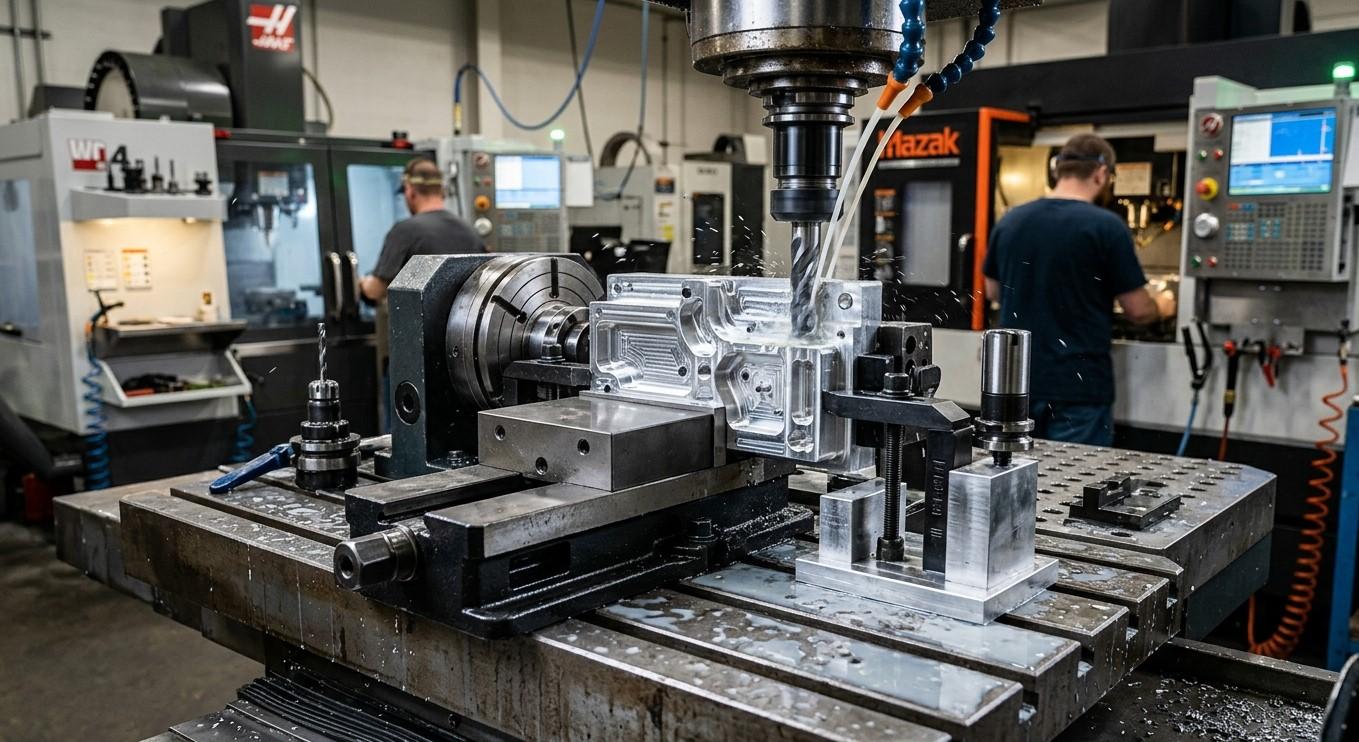
Accurate machining depends on more than the quality of the cutting tool or CNC machine. The way a workpiece is positioned, supported, and secured during machining has a major influence on dimensional accuracy, surface finish, repeatability, and overall production efficiency. Workholding accessories provide the stability required to keep components securely positioned while cutting forces are applied. Without appropriate workholding, even advanced machining equipment may struggle to produce consistent results.
For manufacturers, engineering workshops, fabrication companies, and CNC machining facilities, selecting suitable workholding equipment is an important part of production planning. Khokhawala Trading LLC , an established Industrial Tools Supplier in Dubai , provides a broad range of industrial tools, machining accessories, chucks, vises, and precision equipment for demanding workshop applications.
This guide explains the importance of workholding accessories, the different types available, and how proper workholding can improve machining accuracy and productivity.
What Are Workholding Accessories?
Workholding accessories are devices and components used to hold, position, locate, or support a workpiece during machining and manufacturing operations.
They help prevent unwanted movement while the cutting tool removes material from the component. Depending on the application, workholding systems may be used with milling machines, lathes, CNC machining centers, drilling machines, grinding machines, and other industrial equipment.
Common workholding accessories include:
- Machine vises
- Chucks
- Collets
- Clamps
- Fixtures
- Locating pins
- Stops
- Soft jaws
- Modular workholding systems
- Angle plates
- Magnetic workholding systems
- Step blocks
- T-slot accessories
The correct combination depends on the machine, workpiece geometry, material, machining operation, and required accuracy.
Why Workholding Is Important in Precision Machining
During machining, cutting tools generate forces that can cause the workpiece to move, vibrate, or deform if it is not securely held.
Poor workholding can result in:
- Dimensional inaccuracies
- Poor surface finish
- Chatter and vibration
- Tool breakage
- Workpiece movement
- Incorrect positioning
- Increased setup time
- Higher scrap rates
A properly designed workholding system keeps the component stable and accurately positioned throughout the machining process.
For high-precision CNC operations, this stability becomes even more important because small movements can result in significant dimensional errors.
How Workholding Improves Machining Accuracy
Workholding accessories contribute to accuracy in several ways.
1. Preventing Workpiece Movement
The primary purpose of a workholding system is to prevent unwanted movement. Cutting forces can push or pull the workpiece in different directions. A suitable clamping system counteracts these forces and keeps the component in position.
2. Maintaining Consistent Positioning
Accurate locating surfaces, pins, stops, and fixtures allow components to be positioned consistently from one production cycle to another.
This is particularly important for batch manufacturing where hundreds or thousands of similar components may be produced.
3. Reducing Vibration
Rigid workholding helps minimize vibration and chatter. A stable workpiece allows the cutting tool to operate more consistently, which can improve surface finish and extend tool life.
4. Supporting Thin or Delicate Components
Some workpieces can deform under excessive clamping pressure. Specialized fixtures, soft jaws, and support points can distribute the load more effectively and reduce distortion.
Types of Workholding Accessories
Different machining operations require different workholding solutions.
Machine Vises
Machine vises are widely used on milling machines and CNC machining centers. They provide a practical way to secure rectangular and regularly shaped components.
Common types include:
- Standard machine vises
- Precision vises
- Self-centering vises
- Modular vises
- Multi-axis machining vises
For precision machining, the vise should be properly aligned with the machine and maintained in good condition.
Chucks
Chucks are commonly associated with turning operations, where they hold a rotating workpiece.
Common chuck types include:
- Three-jaw chucks
- Four-jaw independent chucks
- Collet chucks
- Magnetic chucks
- Special-purpose chucks
Three-jaw chucks are convenient for regularly shaped components, while four-jaw independent chucks provide greater control over individual jaw positioning.
Collets
Collets provide accurate gripping for smaller cylindrical workpieces and cutting tools. They can offer good concentricity and are commonly used where repeatability is important.
The correct collet size should match the workpiece or tool diameter. Dirt, chips, and damaged contact surfaces can affect gripping accuracy.
Clamps and Step Blocks
Clamping systems are often used with machine tables and fixtures. Step blocks, straps, T-slot nuts, and related accessories allow operators to secure components of different sizes and shapes.
They are particularly useful for flexible workshop setups.
Fixtures
Fixtures are specialized workholding systems designed for particular components or operations.
A fixture can provide:
- Accurate positioning
- Repeatable setup
- Faster loading and unloading
- Better access to machining areas
- Consistent production
Dedicated fixtures are especially valuable in high-volume manufacturing.
Soft Jaws
Soft jaws can be machined to match the shape of a specific workpiece. They can provide improved contact while reducing the risk of marking or distorting delicate components.
They are commonly used when standard hard jaws cannot provide the required gripping arrangement.
Workholding for CNC Machining
CNC machining requires reliable and repeatable workholding because automated processes often run for extended periods with minimal operator intervention.
A suitable CNC workholding system should provide:
- High rigidity
- Accurate positioning
- Low movement
- Repeatable setups
- Easy loading and unloading
- Adequate tool access
- Compatibility with the machine
The workholding system should also be selected according to the machining operation. A setup suitable for light finishing may not be adequate for heavy roughing.
Factors to Consider When Selecting Workholding Accessories
Choosing workholding equipment requires careful consideration of the entire machining process.
Workpiece Size and Shape
The dimensions and geometry of the component determine which holding system is practical.
Irregular components may require custom fixtures, while standard rectangular parts may be easily secured in a machine vise.
Workpiece Material
Different materials respond differently to clamping pressure. Softer materials may require protective jaws or distributed clamping forces to prevent damage.
Machining Forces
Heavy cutting operations generate greater forces and require more rigid workholding.
Required Accuracy
High-precision applications may require precision vises, collets, specialized fixtures, or high-accuracy chucks.
Production Volume
For low-volume work, flexible workholding may be more economical. High-volume production may justify dedicated fixtures or automated clamping systems.
Machine Compatibility
Always verify that the workholding accessory is compatible with the machine table, spindle, chuck interface, or available mounting system.
The Importance of Rigidity
Rigidity is one of the most important characteristics of an effective workholding system.
When a workpiece moves or vibrates during machining, the cutting tool cannot maintain a consistent cutting path. This can lead to dimensional variation and poor surface quality.
A rigid setup should minimize:
- Workpiece movement
- Fixture deflection
- Vibration
- Clamping instability
- Tool access interference
The workholding system, machine, tool holder, and cutting tool should work together as a stable machining system.
Clamping Pressure and Workpiece Distortion
More clamping force does not always mean better workholding.
Excessive pressure can deform thin-walled or delicate components. Once the component is released after machining, it may return toward its original shape, causing dimensional errors.
Operators should therefore use enough clamping force to resist machining forces without unnecessarily deforming the component.
For sensitive components, wider contact areas, soft jaws, support pads, and specialized fixtures can help distribute pressure.
Workholding and Surface Finish
Workholding can also affect surface finish.
Vibration caused by an unstable workpiece may create:
- Chatter marks
- Uneven surfaces
- Tool marks
- Poor dimensional consistency
A stable setup allows the cutting tool to follow its programmed path more accurately.
This is particularly important during finishing operations where small vibrations can become visible on the final surface.
Workholding and Tool Life
Stable workholding does not only benefit the workpiece. It can also improve cutting-tool performance.
When a component moves or vibrates, the cutting tool may experience inconsistent loads. These conditions can accelerate wear or cause edge chipping.
Reliable workholding can help maintain stable cutting conditions, potentially extending the life of industrial cutting tools and carbide cutting tools.
Improving Setup Efficiency
Good workholding systems can reduce setup time, especially in repetitive manufacturing.
Features such as:
- Quick-change jaws
- Modular fixtures
- Repeatable locating systems
- Dedicated fixtures
- Pre-set stops
can make loading and positioning faster.
Reducing setup time allows machines to spend more time producing components rather than waiting for preparation.
Common Workholding Mistakes to Avoid
Several common mistakes can reduce machining accuracy.
Insufficient Clamping
If the workpiece is not held securely, it may move during cutting.
Excessive Clamping
Too much pressure can deform the workpiece.
Poor Alignment
Incorrectly aligned vises, chucks, or fixtures can create dimensional errors.
Dirty Contact Surfaces
Chips and contamination between surfaces can prevent proper seating.
Excessive Workpiece Overhang
Large unsupported areas can increase vibration and deflection.
Inadequate Fixture Rigidity
A flexible fixture may move under machining forces.
Blocking Tool Access
Workholding should secure the component without interfering with the cutting tool.
Maintaining Workholding Accessories
Regular maintenance helps maintain accuracy and reliability.
Inspect workholding equipment for:
- Worn jaws
- Damaged threads
- Cracks
- Corrosion
- Loose components
- Damaged locating surfaces
- Excessive wear
- Contamination
Clean chucks, vises, fixtures, and clamping components regularly. Lubricate moving components according to manufacturer recommendations.
Precision workholding equipment should also be checked periodically for alignment and accuracy.
The Role of Precision Measuring Tools
Workholding accuracy should be verified when necessary using suitable precision measuring tools .
Dial indicators, micrometers, calipers, height gauges, and other inspection instruments can help verify:
- Vise alignment
- Workpiece position
- Runout
- Component dimensions
- Fixture accuracy
Reliable measurement is essential when machining components with tight tolerances.
Benefits of Proper Workholding
Investing in appropriate workholding accessories can provide several advantages:
Improved Accuracy
Stable positioning helps maintain dimensional requirements.
Better Repeatability
Consistent locating and clamping allow multiple components to be machined with similar results.
Higher Productivity
Efficient setups reduce preparation and loading time.
Improved Surface Finish
Reduced vibration supports smoother machining.
Longer Tool Life
Stable cutting conditions can reduce unnecessary tool stress.
Reduced Scrap
Accurate positioning and controlled clamping help minimize machining errors.
Greater Operator Efficiency
Well-designed workholding makes setup and component handling easier.
Practical Employment Checklist
Before starting a machining operation, operators should consider:
- Is the workholding system suitable for the workpiece?
- Is the component securely clamped?
- Is the clamping pressure appropriate?
- Are the locating surfaces clean?
- Is the vise or chuck properly aligned?
- Is workpiece overhang minimized?
- Can machining forces be safely supported?
- Is the cutting tool clear of the fixture?
- Is vibration likely to occur?
- Are all clamping components in good condition?
Following these checks can help create a more reliable machining setup.
Conclusion
Workholding accessories play a fundamental role in accurate machining. Vises, chucks, collets, clamps, fixtures, soft jaws, locating systems, and other machining accessories provide the stability and repeatability required to produce accurate components. Proper workholding can reduce vibration, prevent workpiece movement, improve surface finish, protect cutting tools, and increase production efficiency.
For businesses looking for dependable machining and industrial tooling solutions, Khokhawala Trading LLC is an established Industrial Tools Supplier in Dubai , offering a broad range of industrial tools, chucks, vises, cutting tools, machining accessories, and precision measuring solutions. Selecting the right workholding system and maintaining it correctly can help workshops achieve greater accuracy, repeatability, productivity, and overall machining performance.

 Български
 English