


Workplace Safety Software for Digital Safety Compliance
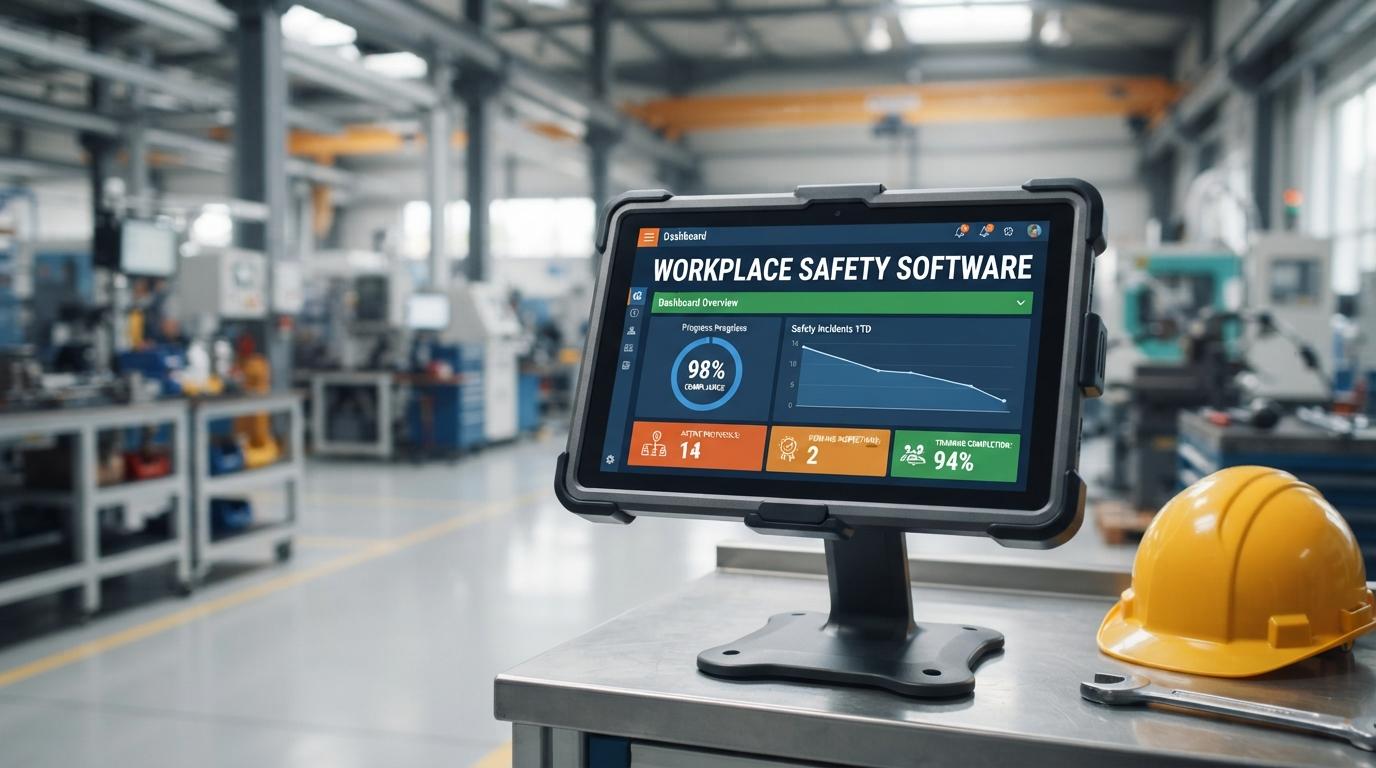
Keeping workplace safety records organized is an important part of maintaining a reliable safety program. Businesses need to manage inspections, risk assessments, incidents, corrective actions, training records, and compliance documents without losing track of important information. Workplace Safety Software can bring these activities into one digital system and help safety teams manage their responsibilities more consistently. Instead of relying on paper forms, spreadsheets, and scattered files, you can use a centralized platform to record safety activities, monitor open actions, and maintain evidence that supports workplace safety compliance.
What Is Workplace Safety Software
Workplace Safety Software is a digital solution that helps organizations manage different parts of their workplace safety program.
Depending on the platform, it may include features for
- Safety inspections
- Hazard reporting
- Risk assessments
- Incident reporting
- Near miss management
- Corrective actions
- Safety training
- Compliance tracking
- Safety documentation
- Safety reports
The main purpose is to give employees and safety managers a structured way to record, access, and manage safety information.
When information is stored in one place, teams can spend less time looking for documents and more time responding to actual safety concerns.
What Is Digital Safety Compliance
Digital safety compliance refers to using digital tools and processes to organize, monitor, and document safety related requirements.
It does not mean that software itself makes an organization compliant.
Instead, software can help businesses manage the activities that support compliance.
For example, a company may need to conduct regular inspections, maintain risk assessments, document incidents, complete employee training, and retain evidence of corrective actions.
A digital platform can help organize these activities and make it easier to see whether required tasks have been completed.
This can be particularly useful for organizations with multiple departments, facilities, or work locations.
Why Workplace Safety Compliance Matters
Workplace safety compliance involves more than completing documents for an audit.
The underlying purpose is to make sure organizations identify hazards, manage risks, establish appropriate controls, and maintain processes that protect employees.
Requirements can vary depending on the industry, location, workplace activities, and applicable regulations.
A company therefore needs a process for keeping its safety information current.
If an inspection identifies a serious issue, the organization should know who is responsible for addressing it and whether the action has been completed.
Workplace Safety Software can help create this connection between safety activities and follow up.
Digital Safety Inspections
Regular inspections can help organizations identify unsafe conditions.
Traditional inspections often involve paper checklists that must later be entered into spreadsheets or other systems.
Safety inspection software can replace much of this manual process with digital checklists.
An inspector can record findings directly in the system.
Depending on the software, they may also be able to attach photographs, notes, documents, or other supporting information.
If an issue requires corrective action, the finding can be assigned to a responsible person.
Managers can then monitor its progress.
This creates a clearer process from inspection to resolution.
Managing Workplace Risk
Workplace risk management is another important area that digital safety software can support.
Organizations need to identify hazards, evaluate risks, determine appropriate controls, and review those controls when workplace conditions change.
A digital system can keep risk assessments organized and make them easier to review.
For example, a safety manager can maintain records for different departments, activities, equipment, or locations.
If a process changes, the relevant assessment can be reviewed and updated rather than relying on an outdated document.
This helps organizations treat risk management as an ongoing activity.
Hazard Reporting
Employees are often the first people to notice unsafe conditions.
A good safety system should make it reasonably easy for them to report hazards.
Workplace Safety Software can provide digital reporting workflows where employees submit information about unsafe conditions, observations, or potential hazards.
A report may include
- Description of the hazard
- Location
- Date and time
- Photographs
- Risk information
- Recommended action
The safety team can then review the report and determine what needs to happen next.
A straightforward reporting process can encourage employees to participate more actively in workplace safety management.
Incident And Near Miss Reporting
Incident reporting is an important part of a safety management program.
When an incident occurs, organizations need accurate information to investigate what happened and determine whether changes are required.
Digital reporting can help standardize the information collected from different incidents.
Near misses should also be recorded because they can provide useful information about hazards that might otherwise remain unnoticed.
By reviewing incident and near miss data, safety teams can identify recurring issues and determine whether existing controls are adequate.
The objective should be to learn from events and prevent similar situations from happening again.
Corrective Action Management
Identifying a problem is not enough.
Organizations need to make sure that corrective actions are assigned, completed, and verified.
Safety management software can help managers create corrective actions directly from inspections, incidents, risk assessments, or employee reports.
Each action can have an assigned person, priority, due date, and status.
Managers can then see which actions are completed and which remain open.
Overdue actions can be identified more easily than they might be through separate spreadsheets or paper records.
This creates greater visibility and accountability.
Supporting Safety Compliance Software Requirements
Safety compliance software can help businesses organize evidence related to their safety processes.
For example, an organization may need to demonstrate that it conducts inspections, manages risks, investigates incidents, and follows up on identified issues.
A centralized system can maintain records of these activities.
It can also help managers prepare reports when they need to review safety performance or demonstrate that specific processes have been followed.
However, businesses should not assume that installing software automatically satisfies every legal or regulatory requirement.
The organization remains responsible for identifying applicable requirements and ensuring that its procedures meet them.
Managing Safety Documentation
Safety programs generate a large amount of documentation.
This may include
- Risk assessments
- Inspection records
- Incident reports
- Training records
- Safety policies
- Corrective action evidence
- Audit information
- Emergency procedures
When these documents are stored across different locations, employees may struggle to find the latest version.
A centralized workplace safety system can help organize important documents and make them available to authorized users.
Document access controls can also help businesses manage who is allowed to view or edit specific information.
Safety Training And Competency Records
Employee training is another part of workplace safety management.
Organizations may need to track whether employees have completed required safety training or whether particular roles require specific qualifications.
Safety management software can help maintain training records and notify responsible teams when training needs attention, depending on the platform.
For example, managers may be able to see which employees have completed a particular course and which employees still need to complete it.
Keeping these records organized can make it easier to manage employee competency requirements.
Automating Safety Workflows
One of the practical benefits of digital safety systems is workflow automation.
Instead of relying on employees to remember every follow up step, the system can guide the process.
For example, when an employee submits a hazard report, the workflow might notify the safety team.
After the finding is reviewed, a corrective action can be assigned to the responsible person.
The system can then track the action until it is completed.
Similar workflows can be created for inspections, incidents, risk assessments, and other safety activities.
Automation does not replace safety professionals. It helps them manage repetitive administrative processes more consistently.
Safety Reports And Compliance Evidence
Managers need useful information to understand whether safety processes are working.
Workplace Safety Software can provide reports about safety activities and outstanding tasks.
Depending on the platform, managers may review
- Inspection results
- Open corrective actions
- Overdue actions
- Incident information
- Near miss reports
- Risk assessment status
- Training completion
- Compliance activities
These reports can help identify areas that require attention.
For example, if a particular location repeatedly reports similar hazards, management may need to investigate the underlying cause rather than treating each finding separately.
Supporting Audits
Audits often require organizations to provide evidence that safety processes are being followed.
Searching through paper files and multiple spreadsheets can take considerable time.
A digital safety system can make records easier to locate when the information has been properly maintained.
Auditors or authorized internal teams may be able to review inspection records, corrective actions, risk assessments, and other evidence according to the organization's access policies.
Good record keeping remains important.
Software can organize the information, but employees still need to enter accurate and complete records.
Benefits Of Workplace Safety Software
A well implemented safety platform can provide several practical benefits.
Centralized Information
Safety records can be maintained in one structured environment.
Better Follow Up
Managers can monitor open and overdue corrective actions.
Consistent Processes
Digital workflows can help different departments follow standardized procedures.
Faster Reporting
Safety teams can create reports without manually combining information from multiple files.
Better Visibility
Managers can see current information about risks, inspections, incidents, and actions.
Improved Accountability
Assigned responsibilities and deadlines make follow up easier to monitor.
Choosing Workplace Safety Software
Before choosing a platform, you should consider your organization's actual safety requirements.
Ask questions such as
- Can the system manage risk assessments?
- Does it support digital safety inspections?
- Can employees report hazards easily?
- Can incidents and near misses be recorded?
- Can corrective actions be assigned and tracked?
- Does it support compliance records?
- Can training information be managed?
- Are reports and dashboards available?
- Can the system support multiple locations?
- Does it provide suitable access controls?
- Can it integrate with other business systems?
Ease of use should also be considered.
If employees find the software complicated, they may avoid using it or enter incomplete information.
How To Implement A Digital Safety System
Implementation should start with your existing safety processes.
Identify which activities are currently managed through paper forms, spreadsheets, emails, or disconnected systems.
Then determine which processes would benefit most from digital workflows.
You can begin with areas such as inspections, hazard reporting, corrective actions, or incident management.
Employees should receive practical training before the system is introduced.
It is also useful to test the platform with a small team first.
Their feedback can help identify problems with forms, workflows, permissions, and reporting before the system is expanded across the organization.
After implementation, managers should regularly review system usage and data quality.
Final Thoughts On Workplace Safety Software
Workplace Safety Software can help organizations organize digital safety compliance by bringing inspections, risk assessments, hazard reporting, incidents, corrective actions, training, and documentation into a structured digital environment.
It can reduce repetitive administrative work and make safety information easier to access and review.
For organizations managing multiple departments or locations, having a centralized system can also provide better visibility into workplace safety management and workplace risk management.
Still, software should support a safety program rather than replace it.
You still need clear procedures, competent safety professionals, employee participation, appropriate risk controls, and regular reviews.
When these elements work together, safety compliance software can become a practical tool for maintaining records, following up on risks, supporting audits, and helping organizations manage workplace safety more consistently.

 Български
 English