


How to Improve Assignment Grammar and Academic Vocabulary
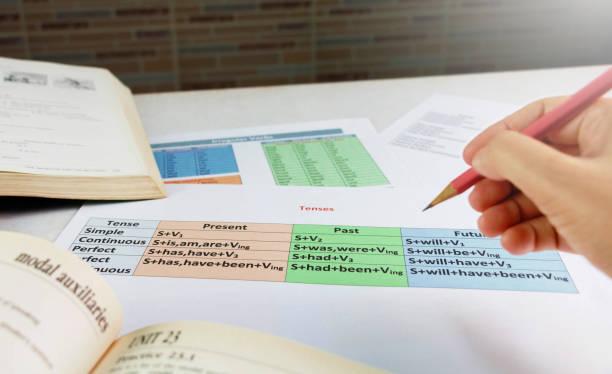
Writing a good assignment is not simply about avoiding grammar mistakes or filling your paragraphs with complicated words. When I edit academic work, I find that the biggest improvements usually come from something much more practical: making each sentence easier to understand and choosing words that accurately express the idea.
This is especially important if English is not your first language. You may understand your subject extremely well but still struggle to explain your ideas in formal academic English. The solution is not to make your writing sound artificial. It is to develop a repeatable process for improving grammar, vocabulary, sentence structure and clarity.
Start With the Mistakes You Actually Make
One of the easiest ways to waste time is to study every grammar rule you can find.
You probably do not need to.
Instead, look at feedback from your previous assignments. Your tutor may have repeatedly marked the same types of errors. Perhaps you confuse singular and plural forms, use the wrong tense, leave out articles, write very long sentences or struggle with punctuation.
Write those problems down.
For example, your personal checklist might contain:
- subject-verb agreement
- articles such as a, an and the
- verb tense
- prepositions
- sentence fragments
- punctuation
- spelling
- word forms
- overly long sentences
- inconsistent terminology
This gives you something much more useful than a generic grammar checklist: a record of the mistakes that are actually affecting your writing.
When you finish your next assignment, check those areas deliberately.
You may be surprised by how quickly repeated errors become easier to recognise.
Separate Writing From Editing
I would not recommend trying to produce perfect grammar while writing your first draft.
When you are developing an argument, your attention should be on the argument. Constantly stopping to decide whether a sentence needs a particular article or preposition can interrupt your thinking.
A better approach is to edit in stages.
First, check the content
Read through the assignment and ask:
- Have I answered the question?
- Is my main argument clear?
- Does every paragraph have a purpose?
- Have I provided evidence for important claims?
- Have I explained the evidence rather than simply describing it?
- Does the conclusion follow logically from the discussion?
If the answer is no, correcting commas will not solve the underlying problem.
Next, check the sentences
Now look at individual sentences.
Ask yourself whether each sentence is:
- clear
- relevant
- reasonably concise
- grammatically complete
- easy to understand
Look particularly closely at sentences containing several clauses. A long sentence is not automatically bad, but long sentences often hide problems with structure.
For example:
Due to the fact that employees may not have received sufficient training, there is a possibility that mistakes could potentially occur during the operation of equipment.
A more direct version is:
Inadequate training may increase the likelihood of equipment-related errors.
The second sentence says more with less effort.
Finally, proofread
Only after the structure and wording are working should you perform your final grammar check.
Read slowly. If possible, read the assignment aloud. Hearing the sentences can make awkward phrasing and missing words much easier to notice.
Build Academic Vocabulary Through Reading
There is a common misconception that improving academic vocabulary means learning difficult words.
It does not.
You need words that are useful for your subject and appropriate for the claim you are making.
I recommend building your vocabulary from the books, journal articles, reports and other credible material you already need to read for your course.
Suppose you are studying occupational health and safety. Words such as hazard, exposure, control, likelihood, severity, mitigation, compliance and assessment may be much more valuable to you than a list of impressive general English words.
Keep a vocabulary notebook and record words in context.
For example:
| Word | Meaning | Useful combination | Your example |
|---|---|---|---|
| assess | evaluate | assess risk | The employer assessed the workplace risk. |
| mitigate | reduce the effect or likelihood | mitigate risk | Additional controls may mitigate the risk. |
| significant | important or meaningful | significant increase | The results showed a significant increase. |
The last column is important. Knowing what a word means is different from knowing how to use it.
Learn Phrases and Collocations
Another useful technique is to learn groups of words rather than isolated vocabulary.
Academic writers regularly use combinations such as:
- conduct research
- assess risk
- provide evidence
- identify factors
- evaluate effectiveness
- significant difference
- potential impact
- key findings
- reach a conclusion
- contribute to
Learning these combinations helps your writing sound natural because you are learning how words actually work together.
When you find a useful phrase in an academic source, record the entire expression rather than copying only one interesting word.
This also reduces the temptation to use complicated vocabulary incorrectly.
Use the Academic Word List Sensibly
The Academic Word List can be a useful resource for expanding general academic vocabulary. Averil Coxhead's original research identified 570 word families from a 3.5-million-word academic corpus. The list was designed to identify vocabulary that occurs frequently across academic texts rather than specialist terminology belonging to one particular subject.
That makes it useful, but I would not treat it as a vocabulary exam.
Do not try to memorise hundreds of words and then force them into your assignment.
Instead:
- Choose a small number of useful words.
- Find them in authentic academic writing.
- Study how they are used.
- Note common word combinations.
- Write your own examples.
- Use them only when they genuinely fit your argument.
Your subject-specific vocabulary should remain at the centre of your learning.
Stop Trying to Sound “Too Academic”
This is one of the most important changes you can make.
Students sometimes believe academic writing has to sound complicated. As a result, they replace ordinary words with longer alternatives even when the meaning becomes less clear.
For example:
The utilisation of appropriate methodologies facilitates the acquisition of knowledge pertaining to workplace hazards.
This sounds formal, but it is unnecessarily complicated.
A clearer version would be:
Using appropriate methods helps researchers understand workplace hazards.
Clear writing is not less academic.
In fact, precision is one of the most valuable qualities you can develop. If use is the right word, use use. If help expresses your meaning, there is no need to replace it with facilitate simply because it looks more sophisticated.
Your vocabulary should reflect the strength of your evidence too.
If a study merely suggests something, do not write that it proves it. If evidence indicates a possible relationship, do not automatically describe the relationship as established.
The University of Manchester's Academic Phrasebank is useful here because it demonstrates language for academic functions such as introducing research, reporting findings, comparing ideas and discussing evidence.
Improve Your Sentences by Removing Unnecessary Words
A surprisingly effective editing exercise is to look for words that can be removed without changing the meaning.
Consider:
It is important to note that workers who have not received adequate training may be more likely to make mistakes.
You might write:
Workers without adequate training may be more likely to make mistakes.
The point remains the same, but the sentence gets straight to it.
Watch for phrases such as:
- due to the fact that → because
- in order to → to
- a large number of → many
- at this point in time → currently
- has the ability to → can
- it is important to note that → remove it when unnecessary
You do not have to eliminate every longer expression. The aim is simply to question wording that adds length without adding meaning.
Pay Attention to Verb Choice
Strong academic writing often depends on precise verbs.
Compare:
The research talks about workplace safety.
with:
The research examines workplace safety.
Or:
The study looks at the effect of training.
with:
The study investigates the effect of training.
The second versions are more precise because the verbs tell the reader what the research actually does.
Useful academic verbs include:
- analyse
- assess
- examine
- evaluate
- identify
- indicate
- demonstrate
- establish
- compare
- investigate
- propose
- suggest
But again, choose based on meaning rather than appearance.
Do not use demonstrate simply because it sounds more academic if the evidence only suggests a conclusion.
Use Grammar Tools as a Learning Aid
Grammar-checking software can help you identify mistakes, especially when you are tired of looking at the same document.
However, I would treat automated suggestions as feedback rather than instructions.
Check every suggested change before accepting it.
This is particularly important with academic terminology. A software tool may suggest replacing a technical term with a more common word even though the technical term is exactly what your subject requires.
Generative AI can also provide useful feedback, but recent research presents a more balanced picture than simply saying “AI improves writing.” A 2026 study of 400 ESL university students reported improvements in grammar, vocabulary, cohesion and overall writing quality after AI-generated feedback, while also identifying concerns about overreliance.
Another 2026 study found that students improved across drafts when using instructor, peer and AI feedback, while students still valued instructor feedback for its relevance and constructive guidance.
That suggests a sensible approach: use technology to help you notice and understand problems, rather than allowing it to do the writing for you.
If a tool changes a sentence, ask why the change improves the sentence. That is where the learning happens.
Get Another Person to Read Your Assignment
You know what you intended to write, so your brain often fills in missing information when you reread your own work.
Another reader does not have that advantage.
Ask someone to read your draft and identify the parts that were difficult to understand.
Instead of asking:
“Is my assignment okay?”
ask specific questions:
- Is my main argument clear?
- Which paragraph was hardest to follow?
- Did any sentence sound unnatural?
- Have I explained my evidence sufficiently?
- Did I use any terminology incorrectly?
- Does the conclusion answer the original question?
Specific questions produce much more useful feedback.
Recent research also supports using different sources of feedback rather than relying on one approach alone. A 2026 study comparing instructor, peer and AI feedback found that each offered different strengths during the writing process.
A 30-Minute Grammar and Vocabulary Check
If your deadline is approaching, you can still make a meaningful improvement in half an hour.
Minutes 1–10: Grammar
Look specifically for your recurring mistakes.
Check:
- verb tense
- subject-verb agreement
- articles
- singular and plural forms
- punctuation
- spelling
- sentence fragments
Do not try to fix everything simultaneously.
Minutes 11–20: Vocabulary
Look for:
- repeated words
- vague wording
- incorrectly used academic terms
- inconsistent terminology
- unnecessarily complicated expressions
- informal language
Replace a word only when the alternative is genuinely more accurate.
Minutes 21–30: Read for clarity
Read your assignment slowly.
Whenever you have to stop and read a sentence twice, investigate it.
Could you make it shorter? Could you make the subject clearer? Does the verb accurately describe the action? Is the relationship between the ideas obvious?
These questions often reveal problems that a conventional spellchecker cannot find.
Apply the Same Skills to Professional Assignments
Grammar and vocabulary become particularly important in technical and professional qualifications because the reader needs to understand both your knowledge and your reasoning.
For example, a NEBOSH assignment may require you to explain hazards, existing controls, additional controls, responsibilities, priorities and the reasons behind your recommendations. Clear writing helps you demonstrate that reasoning without allowing poor sentence construction to obscure the technical content.
If you need additional support understanding or structuring a difficult brief, you can also explore NEBOSH assignment help as a source of guidance.
The important point is that support should complement your own understanding. Your terminology, evidence and conclusions still need to be accurate and appropriate to the assessment.
Create Your Own Editing Checklist
The most useful resource you can build over time is not somebody else's grammar guide.
It is your own.
After every assignment, record three things:
The mistake: What did I get wrong?
The correction: What should I have written?
The rule: Why was the original incorrect?
For example:
Mistake: The results shows that training is effective.
Correction: The results show that training is effective.
Rule: Results is plural, so it takes show, not shows.
Do this consistently and your checklist will become increasingly personal.
After several assignments, you will start recognising your common mistakes before your tutor points them out.
Final Thoughts
Better assignment writing does not come from trying to sound like someone else.
It comes from making your own writing clearer.
Read strong academic material in your subject. Keep track of useful vocabulary and collocations. Learn from your previous corrections. Separate drafting from editing. Use grammar tools carefully. Ask another person to review difficult sections. Most importantly, pay attention to the mistakes you repeatedly make.
You do not need the biggest vocabulary in the classroom.
You need the right vocabulary, accurate grammar and enough control over your sentences to communicate your ideas confidently.

 Български
 Russian