Are Energy-Efficiency Standards Changing Household Cooling Choices in Asia Pacific?

Rising temperatures, urban development, changing residential preferences, and expanding access to household appliances are reshaping cooling requirements across Asia Pacific. Room air conditioners have become an increasingly important component of residential infrastructure, particularly in densely populated cities where prolonged heat exposure is influencing household purchasing decisions. The region's diverse climatic conditions and varying levels of household cooling penetration are also creating distinct demand patterns across established and emerging economies.
The Asia Pacific Room Air Conditioners Market is increasingly influenced by inverter-driven cooling systems, energy-efficient appliance adoption, smart climate control, low-global-warming-potential refrigerants, and residential cooling penetration. These developments are changing product specifications and influencing manufacturers' technology investments. According to a Vyansa Intelligence report, the market was valued at USD 68.43 Billion in 2025 and is projected to reach USD 80.98 Billion by 2032, registering a CAGR of 2.43% during 2026-2032. This trajectory reflects the interaction between household demand, replacement requirements, product innovation, and evolving energy-efficiency regulations.
Residential Demand Remains a Central Industry Foundation
Residential applications represent a fundamental demand base for room air conditioners across the region. Increasing urbanisation, apartment construction, changing household lifestyles, and rising expectations regarding indoor thermal comfort are supporting appliance purchases. In countries experiencing rapid urban development, residential buildings are increasingly incorporating cooling equipment as an essential household installation rather than an optional convenience.
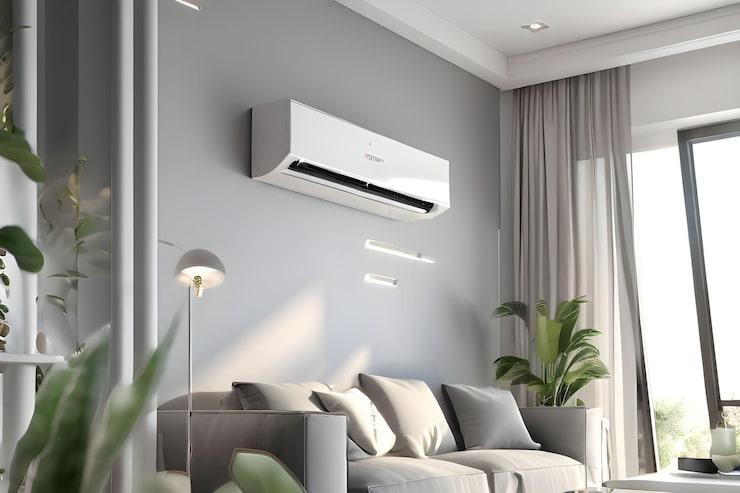
The expansion of apartment complexes and modern housing developments is also influencing product selection. Split air conditioners remain particularly relevant because of their suitability for individual rooms, installation flexibility, and availability across different cooling capacities. Their adaptability to residential layouts allows manufacturers to address diverse household requirements through multiple product configurations.
Replacement demand provides another important source of industry activity. Consumers upgrading older equipment increasingly consider operating efficiency, cooling consistency, noise levels, and maintenance requirements. This creates opportunities for manufacturers offering advanced compressor systems and improved temperature-control capabilities. In this report, residential demand is therefore examined not only through new appliance purchases but also through replacement cycles and changing product preferences.
Energy Efficiency Is Reshaping Product Development
Electricity consumption associated with cooling equipment has become a significant consideration for governments, utilities, manufacturers, and households. Increasing air conditioner ownership can intensify electricity demand during periods of high temperatures, placing additional pressure on power distribution infrastructure. Consequently, energy efficiency is becoming an important competitive and regulatory consideration.
Manufacturers are responding through inverter compressors, improved heat exchangers, variable-speed operation, and intelligent temperature management. These technologies enable equipment to adjust cooling output according to indoor conditions rather than relying exclusively on repeated full-capacity operation. Such capabilities can improve operating efficiency while supporting more consistent indoor temperatures.
Regulatory developments are reinforcing this transition. The ASEAN Centre for Energy has highlighted regional efforts to strengthen minimum energy performance standards and promote energy-efficient room air conditioners through green public procurement. These initiatives indicate that procurement requirements and appliance efficiency policies are becoming increasingly important considerations for manufacturers supplying Southeast Asian economies.
Refrigerant Transition Is Creating New Technology Priorities
Refrigerant selection is becoming another important consideration in product development. Environmental regulations targeting high-global-warming-potential refrigerants are encouraging manufacturers to reconsider refrigerant portfolios, equipment designs, and servicing requirements.
The transition towards lower-impact refrigerants requires coordination across product engineering, component manufacturing, safety certification, installation practices, and after-sales services. Manufacturers must ensure that refrigerant alternatives are compatible with equipment performance requirements while meeting applicable safety and environmental standards.
Australia's regulatory direction and broader international commitments concerning hydrofluorocarbon consumption are reinforcing the need for product adaptation. For manufacturers operating across multiple Asia Pacific economies, differences in regulatory implementation create additional product-planning requirements. Latest market analysis therefore needs to consider refrigerant availability, compliance readiness, and the ability of distribution and servicing networks to support newer cooling technologies.
Smart Connectivity Is Expanding Product Differentiation
Connected room air conditioners are introducing additional differentiation opportunities. Wi-Fi connectivity, smartphone-based controls, programmable operating schedules, occupancy-related adjustments, and integration with smart home ecosystems are changing how manufacturers position their products.
These features can support more flexible cooling management and provide households with greater control over operating conditions. Smart functionality is also relevant to consumers seeking to coordinate multiple appliances through integrated home-management platforms.
However, connectivity alone does not guarantee widespread adoption. Product affordability, internet accessibility, software reliability, data security, and compatibility with existing household systems influence purchasing decisions. Manufacturers therefore need to balance advanced functionality with practical installation and operating requirements.
Industry analysis indicates that technology differentiation will increasingly depend on the combination of cooling performance, energy efficiency, connectivity, and lifecycle convenience rather than individual product features.
Distribution and Product Accessibility Influence Demand
Sales channels remain important in determining how room air conditioners reach households and commercial establishments. Offline retailers, exclusive brand outlets, appliance distributors, and independent dealers continue to support product demonstrations, installation coordination, and after-sales services.
Online channels provide an alternative purchasing route through product comparisons, technical specifications, customer reviews, and home-delivery arrangements. Their importance is particularly relevant in urban locations where digital retail infrastructure and household internet access are well established.
For manufacturers, an integrated distribution strategy can improve product availability while supporting installation and maintenance requirements. A Market research report must therefore assess distribution capabilities alongside product innovation because purchasing convenience and service accessibility influence the overall adoption process.
Opportunities and Challenges Across the Region
The industry presents opportunities through first-time household purchases, replacement of conventional equipment, energy-efficient product upgrades, and increasing demand for connected appliances. Emerging residential developments also create potential demand for compact and appropriately sized cooling systems.
However, affordability remains a consideration in price-sensitive economies. Higher-efficiency equipment and advanced connected features may carry additional upfront costs, creating a gap between product availability and purchasing capacity. Electricity infrastructure constraints, inconsistent regulatory implementation, refrigerant transition requirements, and installation quality also influence adoption.
Manufacturers must consequently develop product portfolios suited to different purchasing capacities and climatic requirements. Detailed market insights indicate that competitive positioning will depend on balancing affordability, technical performance, regulatory compliance, and reliable after-sales support.
Future Industry Direction
The Asia Pacific room air conditioning industry is entering a phase in which demand expansion and technological adaptation are closely connected. Residential cooling requirements will continue to influence product development, while energy-efficiency standards and refrigerant regulations will shape manufacturing priorities.
Companies that align product engineering with local climate conditions, household purchasing capabilities, and regulatory requirements will be better positioned to address the region's diverse demand structure. The industry's longer-term direction will depend on how effectively manufacturers combine accessible cooling solutions with improved efficiency, sustainable refrigerant technologies, and connected functionality.
The central opportunity lies in delivering cooling equipment that meets expanding residential requirements without overlooking electricity consumption, environmental compliance, and long-term operating considerations.