Why Is Inverter Technology Becoming Important in Brazil's Air Conditioning Industry?

Brazil's air-conditioning demand is closely linked to its warm climatic conditions, expanding urban housing, and increasing household expectations for indoor comfort. High temperatures across several parts of the country make cooling equipment an important residential appliance, while commercial establishments also require reliable temperature management. The growing emphasis on energy efficiency is influencing purchasing decisions, encouraging manufacturers to develop equipment that combines cooling performance with lower electricity consumption.
According to a Vyansa Intelligence report, the Brazil Room Air Conditioners Market was valued at USD 1.96 Billion in 2025 and is projected to reach USD 3.01 Billion by 2032, registering a CAGR of 6.32% during 2026-2032. The expansion reflects increasing residential cooling requirements, equipment replacement, wider adoption of inverter technology, and opportunities arising from improvements in product efficiency.
Climatic Conditions Strengthen Residential Cooling Demand
Brazil's climatic diversity creates substantial requirements for indoor temperature management. Hot and humid conditions across several regions increase the need for residential cooling, particularly in urban properties where building density, limited ventilation, and direct solar exposure can intensify indoor heat.
Air conditioners provide more controlled temperature regulation than conventional fans, making them relevant for households seeking improved indoor comfort. Residential demand is also supported by changing expectations around sleeping conditions, home-based working environments, and everyday temperature management.
The Brazilian Energy Research Office (EPE) identifies air conditioning as an increasingly relevant component of household electricity consumption. Its residential energy-efficiency research highlights the relationship between equipment adoption, household cooling requirements, and electricity-system demand. The agency also recognizes the potential for further residential air-conditioning penetration, indicating opportunities for equipment suppliers.
According to this industry report, climatic exposure and household comfort requirements remain important demand foundations, while the availability of efficient and affordable products influences purchasing decisions.
Inverter Technology and Energy Efficiency Reshape Product Preferences
Electricity consumption is a major consideration for Brazilian households because air conditioners can operate regularly during warmer periods. Consumers increasingly evaluate equipment based on cooling capacity, energy consumption, operating costs, and product reliability.
Inverter technology is gaining importance because it adjusts compressor speed according to indoor cooling requirements. This supports more consistent temperature management and can reduce unnecessary energy consumption under suitable operating conditions compared with conventional fixed-speed equipment.
Manufacturers are also differentiating products through intelligent temperature controls, programmable schedules, improved filtration, quieter operation, and connected functionality. These features address households seeking greater control over cooling performance and appliance operation.
Latest market analysis highlights the importance of energy-efficiency labelling in product selection. Brazil's National Institute of Metrology, Quality and Technology (Inmetro) operates the Brazilian Labelling Programme, allowing consumers to compare registered air conditioners according to energy consumption, capacity, and efficiency classification. Its revised labelling methodology also makes the performance of inverter compressors easier to identify.
Split Systems Maintain Importance Across Residential Applications
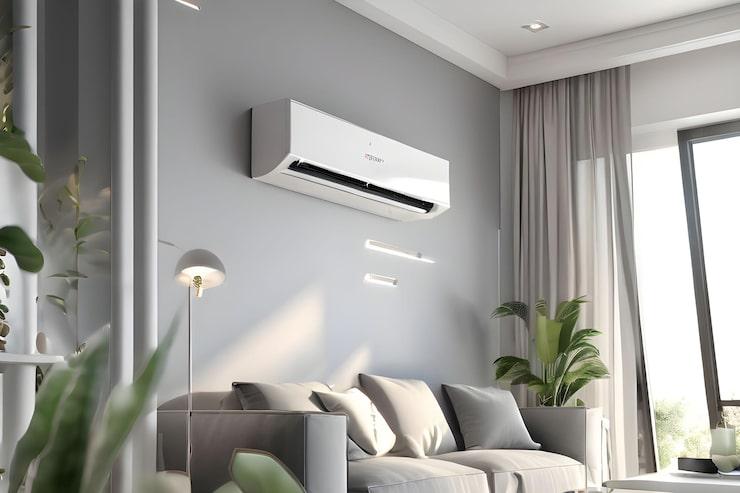
Split air conditioners are relevant to households requiring permanent cooling installations and greater flexibility in room-level temperature management. Their configuration allows consumers to cool individual spaces without installing centralized systems throughout a property. This makes them suitable for apartments, detached houses, and residential buildings with different cooling requirements.
Window air conditioners address households seeking alternative installation configurations, particularly where building layouts or installation restrictions influence purchasing decisions. Portable units can also serve temporary cooling requirements, although their performance and suitability differ from permanently installed systems.
Product selection depends on cooling capacity, room dimensions, installation requirements, noise levels, and energy efficiency. Manufacturers offering differentiated equipment portfolios can therefore address households with varying purchasing budgets and property configurations.
Housing Modernization and Commercial Applications Expand Opportunities
Residential construction, renovation, and replacement purchases create opportunities for air-conditioning suppliers. Newly occupied properties can generate first-time equipment installations, while existing homeowners may replace older appliances with more efficient systems.
Brazil's urban residential environment also creates demand for compact cooling equipment suitable for apartments and smaller living spaces. Property owners increasingly consider indoor temperature management alongside ventilation, insulation, and other residential improvements.
Commercial establishments provide another important application base. Offices, retail stores, hotels, restaurants, healthcare facilities, and educational buildings require suitable indoor temperature conditions. Room air conditioners offer localized cooling for establishments where centralized HVAC infrastructure may not be practical.
According to the detailed market insights, demand opportunities extend across residential and commercial applications, supported by equipment replacement, product modernization, and distribution-channel development.
Refrigerant Transition and Regulatory Requirements Influence Innovation
Environmental considerations are becoming increasingly important in air-conditioning manufacturing. Refrigerants influence equipment efficiency, environmental impact, system design, and servicing requirements. Manufacturers are therefore evaluating alternatives with lower global warming potential while maintaining product reliability and cooling performance.
Brazil's regulatory environment is also influencing product engineering. Inmetro's energy-efficiency framework establishes testing and labelling requirements, while minimum energy-performance requirements encourage improvements in equipment efficiency.
Industry analysis indicates that regulatory compliance is becoming an important competitive consideration. Manufacturers must align product specifications, certification processes, refrigerant selection, and servicing capabilities with applicable requirements.
Competitive Priorities and Future Industry Direction
Competition in Brazil increasingly depends on energy efficiency, product affordability, cooling performance, distribution accessibility, and after-sales support. Inverter compressors, smart controls, improved filtration, and environmentally considerate refrigerants provide opportunities for product differentiation.
The Market research report perspective highlights the importance of addressing both established residential demand and emerging technology preferences. Manufacturers that combine accessible pricing with efficient equipment and reliable servicing can strengthen their position across residential and commercial applications.
Brazil's room-cooling sector is moving toward greater emphasis on energy-efficient equipment and advanced temperature-management technologies. Climatic requirements, household adoption, housing modernization, and regulatory developments will remain important influences on purchasing decisions. Latest market analysis points toward an industry where product efficiency, refrigerant innovation, and equipment affordability increasingly shape competitive positioning.