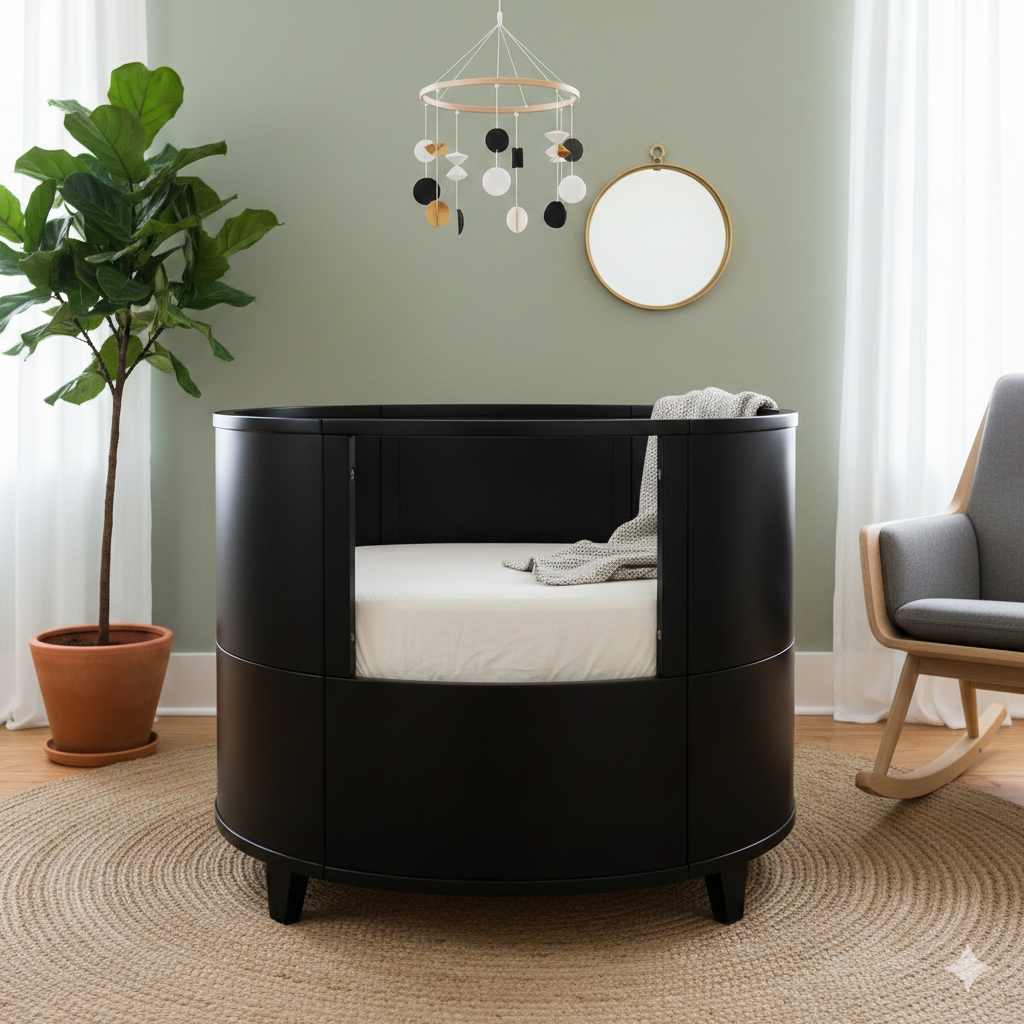

Introduction
It usually happens at the same point every night. You settle your baby, tiptoe out, and then notice a little foot pressed against the end rail or a head tucked tight against the side. The mini crib that felt so clever and space-saving a few months ago suddenly looks very small.
That moment deserves attention. Mini cribs suit compact rooms and small babies, and they do that job well for a while. The trick is knowing when that while is up, because comfort and safety both depend on how your baby fits the space, not on a date on the calendar.
A Straight Answer for Tired Parents
Parents planning a small nursery often search for how long can a baby sleep in a mini crib, and the short answer is that it lasts until your baby outgrows the mattress length, reaches the weight limit set by the maker, or becomes mobile enough to pull up and climb. Age is only a rough guide. A petite baby may fit comfortably for many months, while a long baby may need a bigger bed far sooner.
For families sorting out a compact nursery with help from Boss and Baby, it works best to think in stages rather than a single deadline. Each stage brings a different question to ask at bedtime.
Stage by Stage, From Newborn to Mobile Baby
The newborn months
A newborn barely moves once placed, so a snug mini crib feels natural and keeps the baby close to your bed for night feeds and settling. Fit is rarely an issue here. Your main jobs are a firm, flat mattress and a clear sleep space.
Rolling and sitting
Once your baby starts rolling, shuffling and then sitting up, the crib gets used differently. Heads and hands reach the sides, and sleep often becomes noisier and more restless. Lower the mattress base to its lowest setting as soon as your baby can sit unaided, if your model allows it.
Pulling to stand
This is the real deadline for most families. A baby who can pull up on the rails is testing the height of the crib, and a low rail relative to chest height is a clear signal to move on. Many parents try to squeeze out a few more weeks at this point, and that is where most close calls happen.
Signs Your Baby Is Outgrowing the Mini Crib
Watch for a combination of signs rather than just one. Any of these deserve a closer look:
- Feet or head touching the ends while your baby lies in a natural position
- Weight close to the maker's stated limit, which is printed on the label or in the manual
- Standing or pulling up on the rails, even briefly
- Waking after bumping into the sides or tangling a limb through the slats
- Rail height sitting around chest level when your baby stands
If you tick two or more, start planning the move. Do not wait for the first climb attempt.
Keeping Nights Comfortable Along the Way
A mini crib does not shorten how long your baby can sleep in one night. A well-fitted mini crib supports a full night as easily as a standard cot, and sleep length depends on your baby's age, feeding needs and routine.
Comfort comes from a few simple habits. Dress your baby for the room temperature in lightweight sleepwear or a sleeping bag instead of loose blankets. Keep the crib away from windows, blind cords and heaters. Leave out pillows, toys and padded bumpers, because a bare, calm sleep space is the safest and often the most settled option.
The Mattress Trap Many Parents Miss
Here is the part that catches people out. Parents sometimes add a thicker mattress or a soft topper to make the crib feel cosier or to buy extra months. That raises the sleep surface and lowers the effective rail height, which makes climbing easier and reduces the margin of safety.
Gaps cause trouble too. A mattress that does not fit snugly can leave space at the edges where small limbs can slip, so choose a firm mattress sized for your exact crib and a fitted sheet that stays smooth. Browsing nursery ideas at Boss and Baby is a lovely way to plan the look of the room, but the fit check is something only you can do at home with a hand along each edge.
Planning the Move to a Bigger Bed
Moving early is far easier than moving in a hurry. Pick a time when your baby is well and routines are steady, not during a cold, a holiday or a big change like starting childcare.
A few things help the transition go smoothly:
- Keep the bedtime routine identical, including songs, lighting and sleepwear
- Bring familiar sheets or a favourite sleeping bag into the new cot
- Set up the new sleep space the same way, with the mattress at its lowest position
- Avoid adding padding or soft items to make the bigger bed feel cosy
Common mistakes include waiting until your baby climbs, ignoring the weight limit because the crib still looks roomy, and moving too many things at once.
The Takeaway
A mini crib suits the early months beautifully, but the useful lifespan depends on length, weight, mobility and rail height rather than a set age. Check the fit regularly, keep the sleep space bare and firm, and start planning the next bed when your baby begins sitting tall or pulling up. Boss and Baby has more practical nursery guidance if you would like to keep exploring.
FAQ
Can a newborn sleep in a mini crib from the first night?
Yes, a newborn can sleep in a mini crib from day one as long as the mattress is firm, flat and snug. The small size also makes it easy to keep your baby close during those early weeks.
Is a mini crib fine for both naps and overnight sleep?
Yes, a mini crib works for naps and overnight sleep in exactly the same way. Keeping the setup consistent can help your baby settle faster at both times.
Can a toddler sleep in a mini crib?
Most toddlers outgrow a mini crib well before toddlerhood fully begins, mainly because of height and climbing. A full-size cot or a low toddler bed is usually the safer next step.
Is it safe to buy a second-hand mini crib?
It can be, but only if it meets current safety standards and has all its original parts. Check for loose screws, cracks and missing hardware, and avoid any crib that has been repaired with makeshift fixes.
What should my baby wear to sleep in a mini crib?
A lightweight sleeping bag or fitted sleepwear that suits the room temperature is the best choice. Skip loose blankets so nothing can cover your baby's face during the night.
Where is the best place to put a mini crib in the room?
Place it away from windows, blind cords, heaters and wall decorations your baby could reach. A spot within easy sight and hearing of your bed makes night settling simpler.
Do I need to keep checking the crib once my baby is older?
Yes, checking the screws, mattress fit and rail height every few weeks is a good habit. Small changes in your baby's size and strength can make a safe setup less safe without you noticing.
What if my baby fits but sleeps badly in the mini crib?
Poor sleep does not always mean the crib is too small, as growth spurts, illness and routine changes are common causes. Try adjusting the room temperature and bedtime routine first, then reassess the fit if the problem continues.
Also Read: Pram vs. Stroller: What's the Difference? British and American Terms Explained