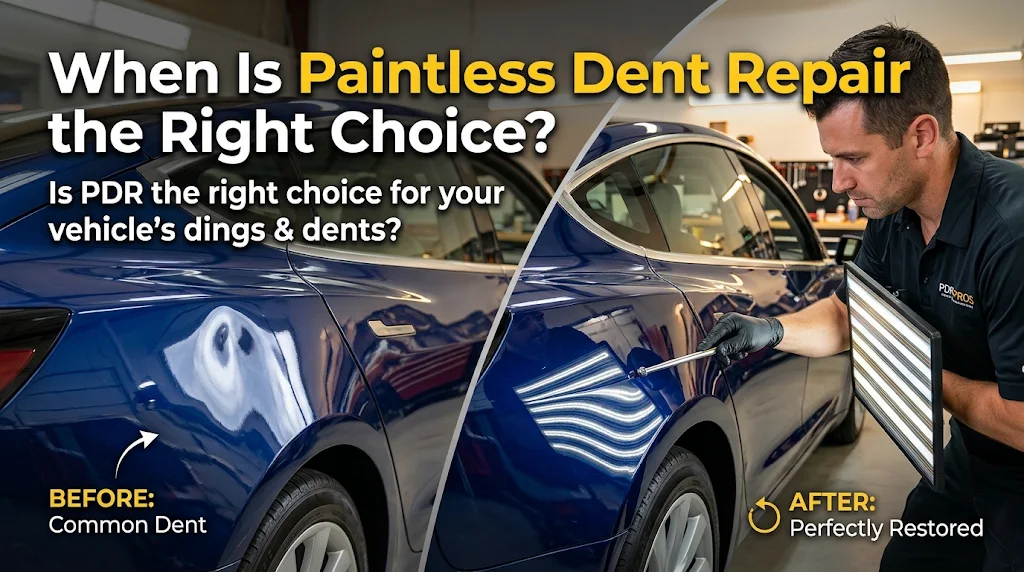
Finding a dent on your vehicle can be frustrating, especially when the rest of the car looks perfectly fine. Whether it comes from a shopping cart, a minor parking accident, or a hailstorm, even a small dent can affect your vehicle's appearance. Fortunately, not every dent requires traditional bodywork or repainting. Paintless dent repair (PDR) offers a practical way to restore certain damaged areas without disturbing the original paint.
If you are considering visiting a Calgary Auto Body Shop, understanding this repair method can help you make a more informed decision. Paintless dent repair is often a suitable option for minor damage when the paint remains intact. However, it is not the right solution for every dent. The size, depth, location, and condition of the damaged panel all play important roles.
Let's explore how paintless dent repair works, when it makes sense, and when traditional auto body repair may be a better choice.
What Is Paintless Dent Repair?
Paintless dent repair is a specialized technique used to remove certain dents from a vehicle's body without sanding, filling, or repainting the affected area. Instead of covering the damage with new materials, technicians carefully reshape the original metal.
The process usually involves accessing the back of the damaged panel. A technician then uses specialized tools to apply controlled pressure and gradually push the dent outward. In areas where accessing the back is difficult, technicians may use glue-pulling techniques to lift the damaged metal from the outside.
The main goal is to restore the panel's original shape while preserving its factory paint finish.
Because this method does not require conventional body filler or repainting, it can save time and help maintain the vehicle's original appearance.
When Is Paintless Dent Repair the Right Choice?
Paintless dent repair works best under specific conditions. Before choosing this option, it is important to understand the types of damage it can usually handle.
1. When the Paint Is Still in Good Condition
The condition of your vehicle's paint is one of the most important factors in determining whether PDR is suitable.
If the dent has not cracked, chipped, or scratched the paint, paintless dent repair may be an excellent solution. Since the process involves reshaping the existing metal, it works best when the original paint remains flexible and undamaged.
For example, a shopping cart might leave a noticeable dent on your vehicle's door without damaging the paint. In this situation, a skilled technician may be able to restore the panel without repainting it.
However, if the paint has already started peeling or cracking, traditional repair may be necessary.
2. When Your Vehicle Has Minor Parking Lot Dents
Parking lots are common places for minor vehicle damage. Another driver might accidentally open a door against your car, or a shopping cart could roll into its side.
These incidents often leave small dents on doors, fenders, and other body panels.
Paintless dent repair can be a good choice when the damage is relatively shallow and the paint remains intact. It can restore the affected area without requiring extensive bodywork.
Instead of living with an annoying dent, you can explore whether PDR can bring the panel back to its original shape.
3. When Hailstorms Cause Multiple Dents
Hailstorms can leave vehicles covered in small dents. These marks commonly appear on roofs, hoods, trunks, and other exposed panels.
When hail damages the metal without breaking the paint, PDR is often an effective repair method.
A technician can work on individual dents using specialized tools and techniques. This approach may restore the vehicle's appearance without requiring several panels to be repainted.
However, severe hail damage can involve hundreds of dents, stretched metal, or cracked paint. In these situations, the technician must assess the overall damage before recommending a suitable repair plan.
4. When You Want to Preserve the Original Paint
Your vehicle's factory paint is designed to provide a consistent finish and protect the body from environmental exposure.
Traditional dent repair may involve sanding, filling, priming, and repainting the damaged area. Although professional repainting can produce excellent results, matching the original finish may sometimes be challenging.
Paintless dent repair avoids this process when the damage is suitable.
If maintaining your vehicle's original paint is important, PDR can be a valuable option. This is particularly useful for newer vehicles, well-maintained cars, and vehicles with original factory finishes.
5. When You Want a Faster Repair Option
Traditional body repairs can take several days, depending on the damage, parts availability, and painting requirements.
Paintless dent repair is often quicker because it eliminates several steps involved in conventional repairs.
Small, accessible dents may sometimes be repaired within a few hours. Larger or more complicated damage can take longer.
If you need your vehicle back on the road quickly, ask a qualified technician whether PDR is suitable. Keep in mind that repair time depends on the number of dents, their locations, and their severity.
Which Types of Dents Can Usually Be Repaired?
Not every dent requires the same repair technique. Understanding the common types of dents can help you determine whether PDR is worth considering.
Door Dings
Door dings are among the most common types of minor vehicle damage. They usually occur when another vehicle's door hits your car in a parking space.
These dents are often shallow and relatively small. If the paint is undamaged, PDR may be an effective solution.
Round Dents
Round dents can happen when small objects strike a vehicle's body. They may appear on doors, fenders, or other metal panels.
When the metal has not stretched excessively, a technician may be able to reshape it using specialized tools.
Hail Damage
Hail can create several small dents across exposed vehicle panels. Paintless dent repair is commonly used to address this type of damage when the paint remains intact.
The repair difficulty depends on the number of dents, their depth, and the accessibility of each affected area.
Minor Creases
Some shallow creases may also qualify for PDR. However, these repairs require additional skill because the metal can be more difficult to reshape.
Deep creases and sharp body lines may require traditional repair methods.
When Is Paintless Dent Repair Not the Best Option?
Although PDR offers several advantages, it has limitations. Choosing the wrong repair method can lead to disappointing results or additional repair work.
Here are some situations where traditional auto body repair may be more appropriate.
1. When the Paint Is Cracked or Chipped
Paintless dent repair does not fix damaged paint. If the impact has caused cracks, scratches, or peeling, the affected area may need sanding, filling, priming, and repainting.
A technician should inspect the damage to determine whether additional paintwork is necessary.
2. When the Dent Is Extremely Deep
Deep dents can stretch the metal beyond its ability to return to its original shape.
Although experienced technicians can repair some challenging dents, severely stretched metal may not respond well to PDR.
Traditional bodywork may provide a more reliable result in these situations.
3. When the Metal Has Sharp Creases
Sharp creases create concentrated damage in the vehicle's body panel.
These areas can be difficult to reshape because the metal may have folded or stretched. Repairing them requires advanced skills, and some cases may not be suitable for paintless dent repair.
4. When the Vehicle Has Structural Damage
PDR is designed for cosmetic dents, not structural damage.
If an accident affects the frame, support components, door structure, or other safety-related parts, the vehicle needs a proper collision assessment.
Never choose a cosmetic repair method when the damage could affect your vehicle's safety.
5. When Previous Repairs Have Affected the Paint
Some vehicles have previously repaired or repainted panels. The paint on these areas may not respond to PDR in the same way as the original factory finish.
For example, poorly applied paint or excessive body filler can increase the risk of damage during the repair process.
A professional inspection can help identify these issues before work begins.
Paintless Dent Repair vs. Traditional Dent Repair
Both methods can restore a vehicle's appearance, but they work differently.
|
Feature |
Paintless Dent Repair |
Traditional Dent Repair |
|
Paint removal |
Usually not required |
Often required |
|
Body filler |
Not normally needed |
May be needed |
|
Repair time |
Often shorter |
Usually longer |
|
Original paint |
Preserved when suitable |
May require repainting |
|
Suitable damage |
Minor dents with intact paint |
Wider range of damage |
|
Cost |
Often less expensive |
Can cost more |
The right method depends on the actual condition of your vehicle. A smaller repair is not automatically a PDR candidate, and traditional repair is not always necessary for every dent.
What Are the Main Benefits of Paintless Dent Repair?
PDR offers several advantages when the damage meets the necessary conditions.
Helps Maintain Your Vehicle's Original Finish
One of the biggest benefits is that the process preserves the factory paint. You do not need additional paintwork for dents that qualify for this method.
Can Be More Affordable
Since PDR generally involves fewer materials and repair steps, it can be less expensive than traditional dent repair.
However, pricing depends on the dent's size, depth, location, and complexity.
Reduces Repair Time
Without sanding, filling, and repainting, many PDR jobs can be completed more quickly.
This can make the process convenient for drivers with busy schedules.
Avoids Unnecessary Bodywork
If the damage is minor, there may be no reason to remove paint or apply body filler.
PDR provides a less invasive approach to restoring suitable damaged panels.
Helps Maintain Vehicle Appearance
Small dents can make an otherwise well-maintained vehicle look neglected.
Removing them can improve the vehicle's overall appearance and may help when preparing it for resale.
How Much Does Paintless Dent Repair Cost?
The cost of paintless dent repair varies from one vehicle to another. There is no single price that applies to every repair.
Several factors influence the final estimate.
-
Dent size: Larger dents generally require more work than smaller ones.
-
Dent depth: Deep dents can be more difficult to reshape.
-
Location: Some panels are harder to access than others.
-
Number of dents: Multiple dents may increase the total repair cost.
-
Metal type: Different panel materials can require different techniques.
-
Damage complexity: Sharp creases and dents near body lines often require additional skill.
The best way to understand the cost is to have the damaged area inspected by an experienced technician. Request a clear estimate before approving the work.
How to Choose the Right Auto Body Repair Professional
Choosing an experienced technician is just as important as selecting the repair method.
Even a small dent requires the right tools, knowledge, and attention to detail.
Here are a few things to consider before booking a repair.
Check Experience With Paintless Dent Repair
Ask whether the technician regularly handles PDR jobs. Experience with different dent types can help ensure the right approach.
Request a Damage Assessment
A reliable professional should inspect the dent before recommending a repair method. They should explain whether PDR is suitable or if traditional bodywork is necessary.
Ask About the Repair Process
Understanding how the technician plans to repair your vehicle can help you feel more confident about the work.
Ask whether they will use conventional PDR tools, glue-pulling techniques, or another suitable method.
Review Previous Work
Before choosing a repair provider, look for examples of completed repairs. Before-and-after photographs can help you understand the quality of their work.
Get a Clear Estimate
Ask for a detailed estimate that explains the expected repair process and any additional work that may be required.
Clear communication helps prevent unexpected costs.
Conclusion
Paintless dent repair can be an excellent choice when your vehicle has minor dents, shallow creases, or hail damage without cracked paint. It offers a practical way to restore the body panels while preserving the original finish. However, deep dents, damaged paint, stretched metal, and structural problems may require traditional repair methods.
The most important step is getting a professional assessment before choosing a repair solution. An experienced technician can evaluate the damage and recommend an approach that suits your vehicle's condition. If you need professional guidance, consider contacting a specialist in Calgary Autobody Repairs to explore the available options and restore your vehicle's appearance with the right repair method.