


Edge Intelligence in Action: How US Supply Chains Master Real Time Data
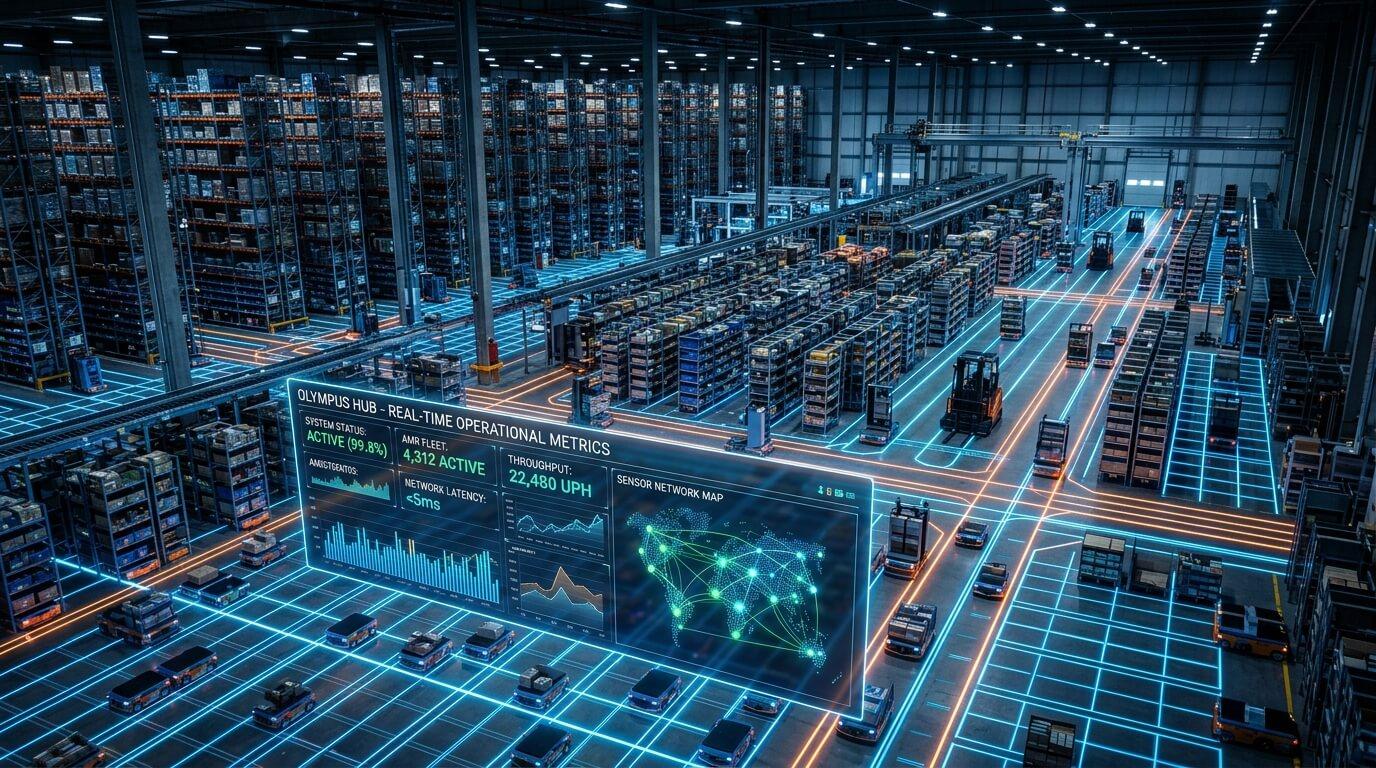
For years, the standard architecture for enterprise logistics was straightforward: gather telemetry from physical devices, send it across public or private networks to a centralized cloud, process the analytics, and broadcast back operational decisions. While this model scaled early digital transformations, modern supply chain realities have exposed its fundamental flaw latency.
When an automated forklift in a 500,000 square foot distribution center encounters an unexpected obstacle, sending sensor data across thousands of miles to a cloud server to determine a path adjustment takes hundreds of milliseconds. In high speed, automated logistics, those extra milliseconds lead to line halts, throughput bottlenecks, and elevated safety risks.
To keep pace with rising fulfillment speeds, US supply chains are fundamentally restructuring their IT infrastructure. Processing power is moving away from distant cloud centers and directly onto localized edge nodes and IoT devices.
The Latency Paradox in Modern Logistics
Industrial Internet of Things (IIoT) adoption across American manufacturing and warehousing has scaled rapidly. Today’s smart warehouses rely on thousands of connected sensors tracking temperature, humidity, vibration, spatial position, and weight distribution.
However, generating massive volumes of operational data creates an architectural strain known as the latency paradox: the more telemetry you generate, the slower your centralized network becomes when attempting to analyze it in real time.
By decoupling immediate operational decision making from cloud connectivity, edge computing eliminates spatial latency. Critical computation happens directly on local gateways, warehouse micro data centers, or embedded AI modules inside autonomous machinery.
3 Core Applications Driving Edge Adoption in US Supply Chains
1. Autonomous Mobile Robots (AMRs) and Fleet Management
Modern US fulfillment centers no longer rely on rigid guided vehicles. AMRs require continuous visual processing, spatial mapping, and collision avoidance. By running computer vision algorithms directly on embedded edge hardware, these units navigate complex, human shared spaces with response times measured in micro seconds.
2. Predictive Maintenance at the Machine Level
Equipment downtime in large scale manufacturing centers can cost tens of thousands of dollars per minute. Rather than dumping raw vibration and acoustic telemetry into cloud storage, edge nodes continuously analyze sensor streams locally. Machine learning algorithms identify mechanical wear signatures on conveyor belts or robotic arms immediately triggering automated maintenance alerts before physical failure occurs.
3. Real Time Cold Chain Monitoring
In pharmaceutical and perishable food logistics, compliance requires continuous environment tracking. Edge enabled trailers evaluate internal temperature and humidity against ambient outdoor conditions instantly. If a cooling unit begins underperforming, local edge hardware can dynamically adjust power settings or re route power microgrids without waiting for human intervention or cloud commands.
Balancing Edge with Cloud: Cost and Infrastructure Realities
Adopting edge architecture does not mean abandoning cloud infrastructure. Instead, forward thinking enterprises use a hybrid computing model where each layer handles what it does best:
By filtering out routine sensor noise at the edge such as sending a summary log every hour rather than streaming temperature data every second enterprises dramatically lower cloud egress charges and bandwidth overhead.
Overcoming Edge Deployment Challenges
While the benefits are clear, transitioning to distributed intelligence brings distinct engineering hurdles:
-
Hardware Lifecycle & Maintenance: Managing physical hardware across dozens of remote fulfillment sites requires standardized remote provisioning tools.
-
Security at the Physical Perimeter: Distributing compute power across thousands of end node devices expands the attack surface. Implementing zero trust device management and hardware level security modules (HSMs) is essential.
-
Orchestration: Deploying software updates, containerized applications, and machine learning models across heterogeneous edge nodes demands strong container orchestration platforms like lightweight Kubernetes (K3s).
For an in depth operational blueprint on deploying edge hardware architectures safely within industrial environments, review Gartner's Supply Chain Technology Trends.
Frequently Asked Questions (FAQs)
What is the main difference between edge computing and cloud computing in supply chain management?
The primary difference lies in where data processing takes place. Cloud computing transmits sensor data across long distances to centralized servers for analysis. Edge computing processes data locally directly on IoT devices, warehouse gateways, or local micro servers enabling real time operational decisions with near zero network latency.
Why are US supply chains shifting away from pure cloud architectures?
Modern automated facilities generate continuous, massive streams of device telemetry. Routing all raw data to a distant cloud creates bandwidth bottlenecks, higher network costs, and dangerous processing delays (the latency paradox). Edge processing solves this by making instantaneous operational decisions on site while sending only essential, filtered summaries to the cloud.
Does implementing edge computing mean a company no longer needs the cloud?
No. Leading logistics enterprises rely on a hybrid edge cloud architecture. Edge nodes manage immediate, microsecond level actions such as collision avoidance for warehouse robotics or real time temperature alerts while the cloud handles long term historical analytics, strategic reporting, demand forecasting, and machine learning model training.
How does edge computing improve autonomous mobile robot (AMR) safety in warehouses?
AMRs equipped with onboard edge hardware process computer vision and spatial mapping algorithms locally. This allows them to evaluate their surroundings and make instantaneous path adjustments or emergency stops in microseconds completely independent of cloud connectivity or network coverage dropouts.
How does edge computing reduce enterprise cloud costs?
Instead of continuously streaming raw telemetry (e.g., transmitting ambient temperature readings every millisecond), edge nodes analyze data streams on site. They filter out routine operational noise and transmit only anomaly events or scheduled summary logs to the cloud, significantly slashing bandwidth usage and cloud data egress fees.
What are the main security risks associated with edge deployment?
Distributing compute hardware across dozens of remote physical warehouses expands an enterprise's total attack surface. Security teams mitigate these risks by enforcing Zero Trust device identity policies, deploying Hardware Security Modules (HSMs), encrypting data at rest and in transit, and using container orchestration tools (like K3s) for automated security patching.
How does edge intelligence power predictive maintenance?
Local sensors measure physical equipment variables such as vibration, heat, and acoustic frequency in real time. Edge nodes continuously evaluate these signals against baseline performance models to detect mechanical wear instantly allowing maintenance teams to service equipment before an expensive line halt occurs.
Which sectors see the highest ROI from edge computing in logistics?
E commerce fulfillment centers, cold chain logistics (pharmaceuticals and perishable foods), automated manufacturing, and high volume third party logistics (3PL) providers gain the highest return on investment due to their strict uptime demands and tight operational margins.
The Path Forward: Physical AI and Edge Convergence
As embedded AI processing chips become more energy efficient and affordable, the distinction between "IoT sensors" and "compute nodes" will disappear completely. US supply chains that invest today in unified edge to cloud architectures are gaining immediate operational efficiency, lower bandwidth expenses, and unrivaled resilience against network disruptions. In the race for fulfillment speed, processing data where it happens is no longer an optional upgrade it is the baseline for modern supply chain engineering.

eSIMcho | Global eSIM & No Roaming

 Български
 English