


How to Create Successful EDDM Postcards for Local Businesses
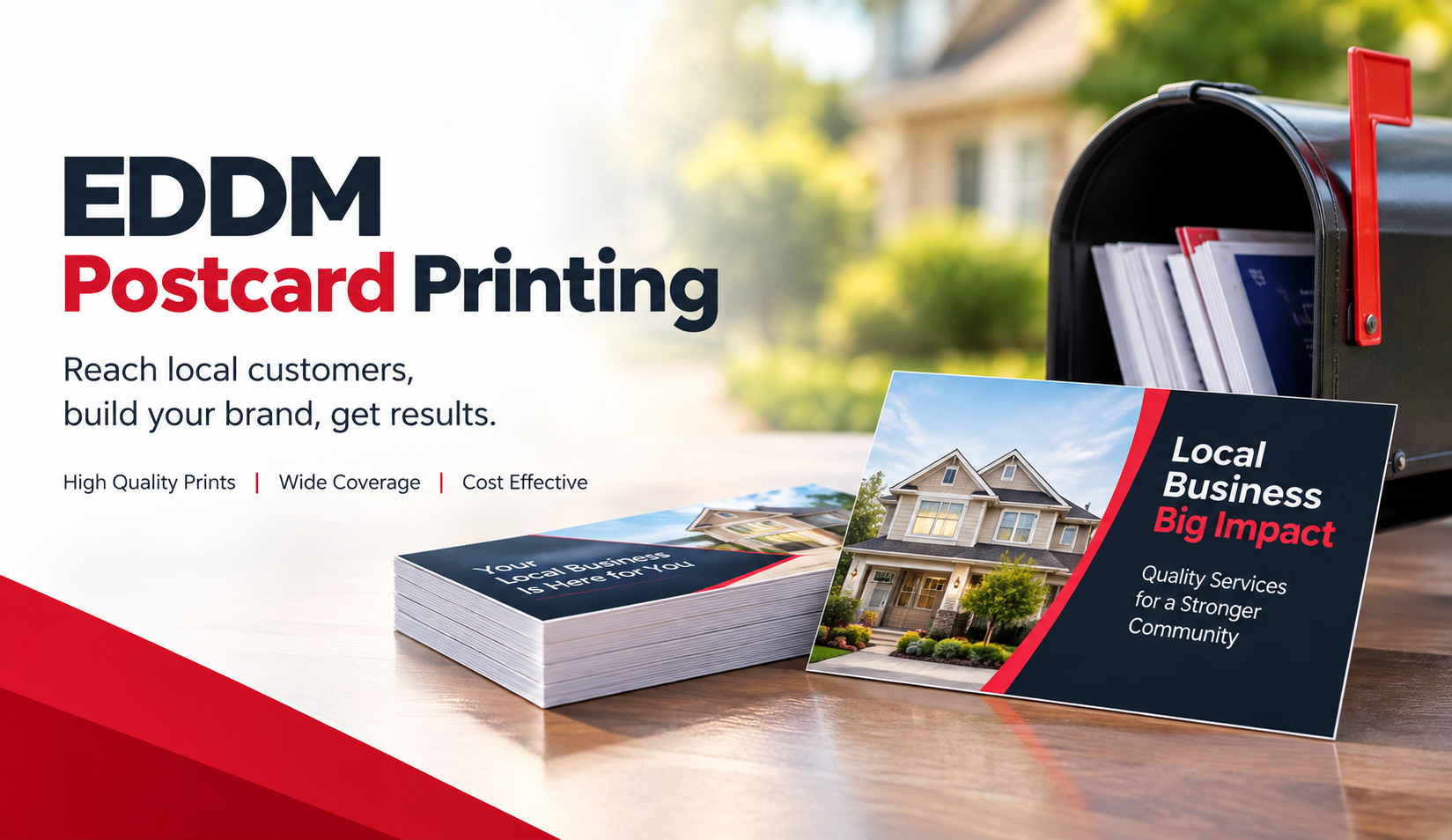
Local business owners often approach direct mail with a simple expectation: print a postcard, send it around the neighborhood, and wait for calls. We understand why that sounds reasonable. The problem usually starts when the postcard tries to say too much, targets the wrong area, or gives residents no clear reason to respond.
A successful EDDM campaign needs more than an attractive design. Businesses need the right neighborhoods, a relevant offer, clear messaging, an easy next step, and a piece of mail that meets postal requirements. That is why we encourage businesses to think about strategy before they start EDDM Postcard Printing .
When those pieces work together, a postcard can introduce a local business to households that genuinely have a reason to remember it. When they do not, even excellent print quality cannot rescue a weak campaign.
Start With the Neighborhood, Not the Postcard Design
One of the most common mistakes we see happens before anyone chooses a headline or image. A business selects a large mailing area simply because reaching more homes feels safer.
EDDM works best when geography matches the business model. A neighborhood restaurant, roofing contractor, dentist, landscaper, gym, or home service provider usually gains more from relevant local coverage than from mailing as widely as the budget allows.
Match Carrier Routes to Real Customer Behavior
Businesses should first consider how far customers normally travel to buy their product or service. A coffee shop may depend heavily on nearby households, while a specialized contractor may comfortably serve a much larger radius.
USPS Every Door Direct Mail allows businesses to select carrier routes rather than purchasing a traditional list of individual names and addresses. That makes route selection an important marketing decision, not just a postal step.
We recommend looking at practical factors such as service radius, household concentration, nearby competitors, property type, and previous customer locations. The goal is not to find a supposedly perfect neighborhood. The goal is to remove areas that make little commercial sense.
Avoid Treating Every Household the Same
EDDM reaches addresses throughout the carrier routes you select, so your message needs enough relevance to work across that audience. A very narrow message can struggle when households have different needs.
For example, a landscaping company may focus on seasonal yard maintenance instead of promoting one highly specific landscaping service. A restaurant might introduce a family meal offer instead of assuming every recipient already knows the menu.
That broader relevance gives the postcard a better chance of connecting without making the copy vague.
Give Your EDDM Postcard One Clear Job
Many unsuccessful postcards look like miniature websites. They contain several services, multiple offers, social icons, long paragraphs, certifications, maps, phone numbers, QR codes, and several competing calls to action.
We understand the temptation. Printing and postage cost money, so businesses naturally want to fit as much value as possible onto each piece. In practice, too many messages can make the postcard harder to understand.
Decide What Response You Actually Want
Before writing the copy, complete one sentence: “After reading this postcard, we want the customer to…”
The answer might involve calling for an estimate, scanning a QR code, visiting a location, booking an appointment, using a coupon, or viewing a landing page. Pick one primary action and build the postcard around it.
Secondary contact details can still appear, but they should not compete visually with the main response path.
Build the Message Around One Main Benefit
Customers rarely spend much time studying unsolicited mail. They scan for relevance first.
A strong EDDM postcard quickly answers three questions: What is this? Why should this matter to me? What should I do next?
A neighborhood HVAC company might lead with seasonal comfort. A dental office could focus on convenient local care. A restaurant might emphasize a nearby dining option or a practical introductory offer.
Clear beats clever when someone has only a few seconds to decide whether to keep the mailpiece.
Write Headlines That Make Sense Without Explanation
Businesses sometimes choose headlines that sound creative in a meeting but mean very little to a resident opening the mailbox.
Statements such as “Experience the Difference” or “Solutions You Can Trust” could describe almost any company. They use valuable space without communicating a specific benefit.
Lead With Relevance
The headline should connect the service, need, or offer with the local customer.
Instead of making the company name the largest element, businesses can lead with what the recipient actually cares about. A pest control company could emphasize a seasonal pest problem. A home improvement business could focus on an exterior issue homeowners can immediately recognize.
The business name still matters, but the customer problem usually deserves stronger visual priority.
Keep Supporting Copy Short
Once the headline creates interest, the supporting copy should explain enough to move the reader toward action.
We typically recommend short sentences, recognizable benefits, and specific information. Avoid stuffing every service into the postcard. Customers can explore secondary services after they visit the website or contact the business.
Good postcard copy reduces friction rather than trying to complete the entire sales conversation.
Create an Offer That Fits the Customer Decision
Not every successful EDDM postcard needs a large discount. In some industries, an aggressive discount can even weaken credibility.
The offer should make the next step easier. That might mean a complimentary consultation, seasonal package, introductory service, bundled option, limited local menu offer, or another incentive that makes sense for the business.
Make the Value Easy to Understand
Complicated promotions create hesitation. If customers need to study several lines of exclusions before they understand the offer, the postcard has probably become too difficult.
We prefer offers that customers can understand almost instantly. The business should also make important conditions visible rather than hiding them in tiny text.
A clear offer builds trust and gives staff fewer problems when customers redeem it.
Use Genuine Urgency Instead of Artificial Pressure
A real expiration date can help people act rather than leaving the postcard on a counter for several weeks.
However, urgency should reflect an actual campaign period. Businesses should avoid exaggerated phrases or artificial deadlines that they do not intend to honor.
Professional direct mail works better when the offer feels credible.
Design EDDM Postcards for a Real Mailbox
A design can look excellent on a large computer monitor and still perform poorly when someone holds the printed piece.
We always recommend evaluating the postcard at its physical size. Headlines need enough contrast, contact information needs comfortable spacing, and important content should not disappear into decorative backgrounds.
Create a Simple Visual Hierarchy
A recipient should know where to look first, second, and third.
The headline usually takes first priority. The main image or visual support comes next. The offer and call to action then guide the reader toward a response.
Whitespace also matters. Filling every open area with text or graphics can make an inexpensive postcard feel even cheaper.
Use Images That Support the Message
Generic stock photography can make a local business look disconnected from its actual service.
Whenever possible, businesses should use strong service-related photography, recognizable products, completed work, food photography, property images, or other visuals that help customers understand what they offer.
The image does not need to explain everything. It needs to reinforce the reason someone should continue reading.
Make Sure the Postcard Actually Qualifies for EDDM
This step deserves attention early in the design process.
Not every postcard size qualifies for EDDM. USPS requires EDDM Retail pieces to meet its standards for flats, and qualifying pieces must meet specific dimensional requirements. A business should not design a small standard postcard first and assume USPS will accept it for EDDM afterward.
Plan Postal Requirements Before Final Artwork
We recommend confirming the intended mailpiece size before the designer finishes the layout.
The postcard also needs the correct mailing information and EDDM indicia. USPS provides placement requirements for the Retail indicia, so designers should reserve that area instead of squeezing postal information into leftover space during final production.
Early planning prevents unnecessary redesigns and production delays.
Do Not Sacrifice Readability for a Larger Format
A larger postcard gives businesses more room, but that does not mean every inch needs content.
Use additional space to improve hierarchy, imagery, offer visibility, and readability. Increasing the amount of copy simply because the postcard has more room usually defeats the purpose.
The physical format should support the message rather than control it.
Think About Printing Cost and Campaign Value Together
Business owners naturally watch printing and postage expenses, especially when mailing thousands of pieces. We encourage that discipline, but reducing unit cost should not become the only goal.
Cheap printing provides little value when weak targeting or confusing artwork wastes most of the mailing. At the same time, expensive finishes cannot compensate for an irrelevant message.
Businesses planning a budget can review the main factors that influence direct mail printing costs before choosing quantity, stock, size, and finishing.
Compare Cost Per Meaningful Household
Suppose one route reaches a large number of addresses but sits well outside the company's normal service area. Another route costs the same per piece but contains households much closer to existing customers.
The second route may represent better business value even though both mailings have similar print and postage expenses.
We encourage businesses to evaluate where each piece goes, not just what each piece costs.
Give Customers More Than One Practical Response Option
Different customers prefer different ways to respond.
Some will call. Others will scan a QR code, visit a website, search the business name, or drive directly to the location. The postcard should support those behaviors without becoming cluttered.
Keep the Main Call to Action Obvious
A QR code can work well when it leads somewhere useful. Sending people to a generic homepage after advertising a specific offer creates unnecessary friction.
Instead, connect the QR code to a relevant service page, booking page, menu, offer page, or campaign landing page. Businesses should also test the code from the printed proof before approving production.
If phone calls matter most, make the number easy to find. Do not force readers to search for the contact method.
Make Mobile Experience Part of the Postcard Strategy
A strong printed postcard can still lose a potential customer when the linked page loads poorly on a phone.
Before mailing, businesses should check the landing page on several mobile devices. Confirm that the page loads quickly, matches the postcard message, displays the offer clearly, and makes the next action simple.
Print and digital should continue the same customer journey.
Track EDDM Results Instead of Guessing
Local businesses sometimes finish a mailing and judge performance by whether the office “felt busier.” That makes future campaign decisions difficult.
Tracking does not need a complicated attribution system. Businesses simply need enough information to distinguish responses from normal business activity.
Use Campaign-Specific Response Signals
A unique QR code destination, promotional code, landing page, phone extension, coupon, or simple “How did you hear about us?” process can provide useful evidence.
Teams should decide how they will track responses before the postcards enter the mail stream. Otherwise, interested customers may contact the business while no one records the source.
Consistent tracking helps businesses compare neighborhoods, offers, creative approaches, and future mailing periods.
Judge More Than Immediate Sales
Some local services involve longer buying cycles. A homeowner may keep a roofing, plumbing, remodeling, or landscaping postcard until a need develops.
For that reason, businesses should consider inquiries, website visits, coupon use, calls, appointments, and actual sales when reviewing results.
The goal is to learn enough from each mailing to make the next one more focused.
Common EDDM Postcard Mistakes We Recommend Avoiding
Across local direct mail projects, the same problems appear repeatedly. Businesses choose too broad an area, place the company name above the customer benefit, add excessive copy, use an unclear offer, or forget to plan measurement.
Another common problem involves changing everything after one campaign. If the audience, design, headline, offer, timing, and format all change at once, the business learns very little about what actually affected performance.
We prefer controlled improvement. Keep strong elements, identify the weakest assumption, test a meaningful change, and compare the next result.
That approach turns EDDM from a one-time printing expense into a local marketing process that businesses can improve over time.
FAQs About Successful EDDM Postcards
What Size Postcard Works Best for EDDM?
The best size depends on the design, message, budget, and USPS eligibility requirements. Businesses should first confirm that the chosen dimensions qualify for EDDM flats, then select a size that gives the message enough room without encouraging unnecessary content.
How Do Local Businesses Choose the Best EDDM Routes?
Start with the areas the business can realistically serve. Review existing customer locations, travel distance, neighborhood characteristics, property types, and nearby competition. Route selection should reflect customer behavior rather than simply choosing the routes with the largest number of addresses.
Should an EDDM Postcard Include a QR Code?
A QR code can help when it gives the recipient a useful next step. Link it to a relevant landing page, booking page, menu, estimate request, or offer rather than adding a code simply because space allows. Always test the printed code before mailing.
How Can a Business Measure Whether an EDDM Campaign Worked?
Use identifiable response methods such as campaign landing pages, QR codes, coupon codes, unique offers, call tracking, or source questions during booking. Record responses consistently and compare the campaign against its objective instead of relying only on general sales activity.
Conclusion
Successful EDDM postcards rarely succeed because of one clever headline or expensive print finish. Strong campaigns connect the right neighborhood, a relevant customer need, a clear message, professional design, correct postal preparation, and a response method the business can measure.
We recommend treating every mailing as part of an ongoing local marketing process. Start with a sensitive audience, give the postcard one main job, make the offer easy to understand, check postal requirements before printing, and track what happens after delivery.
Businesses that apply those fundamentals can make more informed decisions about future direct mail rather than repeating the same campaign and hoping for a different result. For additional direct mail resources and planning support, businesses can explore MailProsUSA and use the information that fits their own market, customers, and campaign goals.

 English
 Russian