


Raf Simons' Fashion Career: From His Own Label to Dior, Calvin Klein & Prada
A designer can work for major luxury houses without losing the identity that made people notice him in the first place. Raf Simons is a strong example. His career moved from industrial design to an independent menswear label, then through Jil Sander, Dior, Calvin Klein, and Prada.
Raf Simons built his reputation through his own menswear label before becoming creative director at Jil Sander, Dior, and Calvin Klein, and later co-creative director at Prada. His work consistently connected youth culture, music, art, tailoring, and modern proportions.
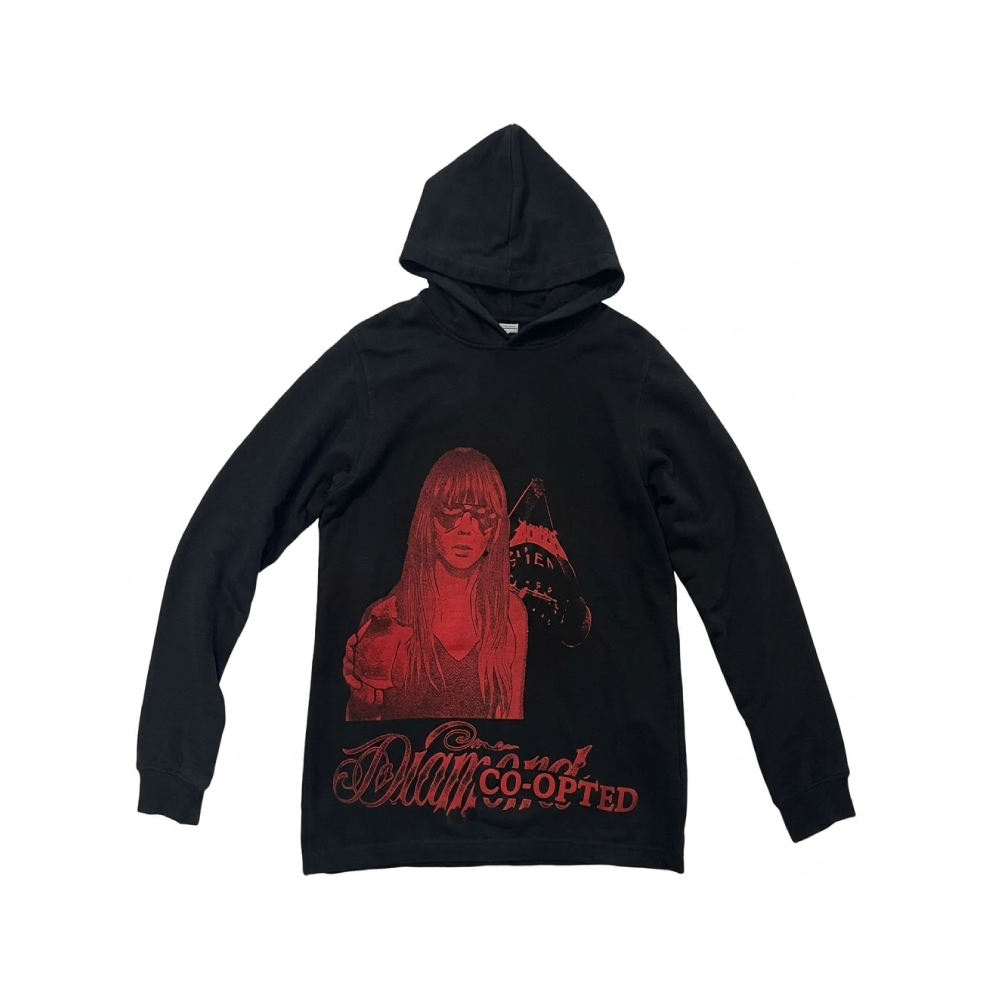
For men who know him mainly through oversized hoodies, graphic tees, or runway-inspired streetwear, the interesting part is how those pieces connect to a much bigger design story.
From Industrial Design to the Raf Simons Label
Before fashion became his career, Simons studied industrial design and furniture design, graduating in 1991. He worked as a furniture designer and also interned at Walter Van Beirendonck's studio. That background matters because his later fashion work often showed a strong interest in construction, proportion, objects, and presentation.
Linda Loppa, then associated with the fashion department at Antwerp's Royal Academy, encouraged him to move toward menswear. Unlike many established designers, Simons did not come through a traditional fashion-school route. He taught himself menswear design and launched his own label in 1995.
That beginning shaped the personality of the brand.
His early collections were closely connected to youth culture, music, subcultures, and outsider identity. Instead of treating menswear as simply a set of formal garments, Simons approached clothing as part of a wider cultural language.
That is one reason his early work still interests streetwear fans.
The clothes were not simply about looking different. They communicated in a mood.
Why the early label mattered
Several characteristics became associated with the Raf Simons approach:
-
Youth culture rather than conventional luxury as a source of inspiration
-
Strong connections between clothing and music
-
Tailoring mixed with youthful, rebellious references
-
Attention to silhouette and proportion
-
Graphics and statements that carried cultural meaning
-
A balance between minimal construction and emotionally charged styling
The Museum of Antwerp notes that his early work combined traditional tailoring with references to youth cultures and music, helping create a distinctive direction in menswear.
Jil Sander: Refining the Designer for a Major Luxury House
In 2005, Simons moved from his independent label into a major luxury position as creative director of Jil Sander. He worked across menswear and womenswear until 2012.
This was an important transition.
His own label had established him as a designer with a strong cultural voice. Jil Sander required him to work within an existing luxury identity known for precision and modernism.
Rather than abandoning his approach, he adapted it.
The result was a more refined expression of ideas that had already appeared in his independent work. Silhouette, fabric, tailoring, and proportion became increasingly important. His work at Jil Sander demonstrated that the designer could operate at a global luxury level without becoming creatively anonymous.
For someone studying his career today, this period helps explain why Simons became more than a cult menswear designer. He proved he could interpret and develop an established fashion house while maintaining a recognizable point of view.
That ability would become even more important at Dior.
Dior: Bringing a New Energy to a Historic House
In 2012, Simons was appointed artistic director of Christian Dior, responsible for women's haute couture, ready-to-wear, and accessories. He presented his first haute couture collection in July that year.
The move was significant because Dior represented a very different fashion environment from the underground references of his early career.
Simons had to work with one of the most recognizable names in fashion while bringing his own understanding of modernity to the house.
His Dior work showed how his design thinking could stretch beyond menswear. Romantic silhouettes, tailoring, architectural construction, and historical references could coexist without feeling disconnected from his contemporary approach.
This is also where his ability to translate a personal design vocabulary into a heritage luxury house became especially visible.
His tenure lasted until 2015.
Rather than viewing the Dior chapter as a departure from the designer's roots, it makes more sense to see it as another stage in his development. The independent designer who once focused heavily on youth culture was now working with couture techniques, formal luxury, and the history of a major French fashion house.
Calvin Klein: American Culture Meets Raf Simons' Vision
Simons became chief creative officer of Calvin Klein in 2016, a role he held until 2018. His responsibilities covered the brand's broader creative direction, making this another major test of his ability to work across categories and audiences.
Calvin Klein gave him a different cultural vocabulary.
Instead of the European heritage of Dior, Simons encountered an American brand with deep connections to advertising, youth culture, denim, underwear, minimalism, and popular imagery.
His approach incorporated American references into fashion presentations and collections. The period became known for a more conceptual runway identity, including the Calvin Klein 205W39NYC label.
The partnership also produced major industry recognition. In 2017, Simons received both the CFDA Womenswear and Menswear Designer of the Year awards for his work at Calvin Klein, and he received the womenswear award again in 2018.
The Calvin Klein chapter ended in December 2018 after the company and Simons agreed to part ways following a difference in creative direction.
For fashion followers, the important lesson is that Simons was never simply copying the aesthetic of his own label. He repeatedly entered different fashion systems and interpreted them through his own cultural lens.
Prada: A Different Kind of Creative Partnership
In 2020, Raf Simons joined Prada as co-creative director alongside Miuccia Prada. This appointment was unusual because the two designers shared equal responsibility for creative input and decision-making.
The first Prada collection designed by Prada and Simons together was the Spring/Summer 2021 womenswear collection, presented in Milan in September 2020.
This partnership was different from the conventional idea of one designer replacing another.
Instead, it created a dialogue between two established creative voices.
That makes Prada an important part of understanding Simons' career. He was no longer simply proving that an independent designer could succeed inside a major fashion house. He was participating in a shared creative model with another designer who had already built one of the industry's most distinctive brands.
For students of fashion, it is a useful example of how creative direction can evolve beyond the traditional single-designer model.
What His Career Means for Streetwear Fans
If your wardrobe is more focused on hoodies, oversized tees, sneakers, and relaxed trousers than couture, it can be easy to separate Simons' runway career from the clothes people wear every day.
That would miss the connection.
A Raf Simons Hoodie can be appreciated for its silhouette, graphic treatment, proportions, fabric weight, or cultural reference without requiring the wearer to know every runway collection. The same applies to a Raf Simons T-shirt.
The attraction often comes from the attitude behind the design.
Simons' official biography describes recurring interests in individuality, rebellious youth cultures, traditional menswear, modern proportions, fabrics, textures, construction, and new shapes.
Those ideas help explain why his influence reaches streetwear.
What to look for when buying
If you are shopping for Simons-inspired or archival pieces, pay attention to:
-
Fit: Oversized does not automatically mean well-designed. Check shoulder placement, sleeve length, and body proportions.
-
Fabric: A heavyweight hoodie should feel substantial, while lighter cotton works better for layering.
-
Graphics: Ask what the graphic contributes beyond decoration.
-
Construction: Look at seams, cuffs, collars, hems, and finishing.
-
Era: Different periods of his career have noticeably different visual identities.
-
Authenticity: When buying expensive archival or secondhand pieces, verify labels, construction details, provenance, and seller reputation.
This is where fashion knowledge becomes more useful than simply recognizing a famous name.
Why Raf Simons' Career Still Matters
The strongest part of Simons' career is not simply the list of luxury houses on his résumé.
It is the continuity of his ideas.
He moved from furniture and industrial design into self-taught menswear. He then worked at Jil Sander, Dior, Calvin Klein, and Prada. Each house presented a different creative problem, yet his interest in individuality, youth culture, proportion, construction, and cultural references remained visible.
His independent label eventually closed. The Museum of Antwerp records that the eponymous brand ended in 2022 after 27 years.
That closure does not erase its importance.
If anything, it makes the archive more useful for understanding how contemporary menswear developed from the 1990s onward.
For today's streetwear buyer, the takeaway is simple: good design often has a story behind the shape. A hoodie can be comfortable and practical while still reflecting ideas about youth, music, identity, proportion, and culture.
FAQ: Raf Simons' Fashion Career
1. When did Raf Simons start his own fashion label?
Raf Simons launched his eponymous menswear label in 1995 after studying industrial and furniture design and working in furniture design. He taught himself menswear design, developing a style strongly connected to youth culture, music, art, and individuality.
2. When did Raf Simons work at Dior?
Raf Simons became artistic director of Christian Dior in 2012, overseeing women's haute couture, ready-to-wear, and accessories. He remained at Dior until 2015, bringing a modern and highly considered approach to the historic French fashion house.
3. What did Raf Simons do at Calvin Klein?
Simons became Calvin Klein's chief creative officer in 2016 and remained there until 2018. He directed the brand's wider creative strategy and received major industry recognition, including CFDA awards for both menswear and womenswear in 2017.
4. When did Raf Simons join Prada?
Raf Simons joined Prada as co-creative director in 2020, working alongside Miuccia Prada with equal creative responsibilities. Their first jointly designed collection was Prada's Spring/Summer 2021 womenswear collection, shown in Milan in September 2020.
5. Why is Raf Simons important to menswear?
Simons helped connect menswear with youth culture, music, art, and subcultural identity while maintaining strong attention to tailoring, proportion, fabric, and construction. His influence can still be seen in contemporary designer streetwear and oversized casual clothing.
Conclusion: A Career Built on Ideas, Not Just Labels
Raf Simons' fashion career is best understood as a continuous conversation between culture and clothing. His own label established the foundation, Jil Sander refined his approach within luxury, Dior expanded his language into couture and womenswear, Calvin Klein placed it inside an American cultural framework, and Prada created a rare partnership with Miuccia Prada.
For modern streetwear fans, that history gives more meaning to the clothes. A Raf Simons Hoodie or Raf Simons T-shirt is not simply another designer basic when its proportions, graphics, materials, and references are considered as part of a larger design philosophy.
If you are building a designer wardrobe, start with the details rather than the logo. Study the fit, fabric, construction, graphic language, and collection history. That is where the real value of fashion knowledge begins.

 English
 Russian